

Seb Frey is a REALTOR® and founder of Team Sixty Plus, a curated network connecting older adults and their families with trusted professionals across California. With decades of experience helping homeowners 60+ navigate major life transitions—like downsizing, aging in place, or passing on a legacy—Seb brings deep market knowledge, a compassionate approach, and a commitment to simplifying complex decisions. When he’s not advising clients, he’s sharing expert insights on real estate, retirement strategies, and quality-of-life resources for the 60+ community.
Dana K. White is a decluttering expert and popular author known for her practical, relatable approach to overcoming household chaos. Drawing on her own journey from “slob” to organized, she offers readers a clear, humorous, and compassionate framework for tackling clutter in real life. Through her blog A Slob Comes Clean, bestselling books, and podcast, Dana empowers people to conquer overwhelm, embrace realistic systems, and maintain a home they can truly enjoy—no matter how busy or messy life gets.
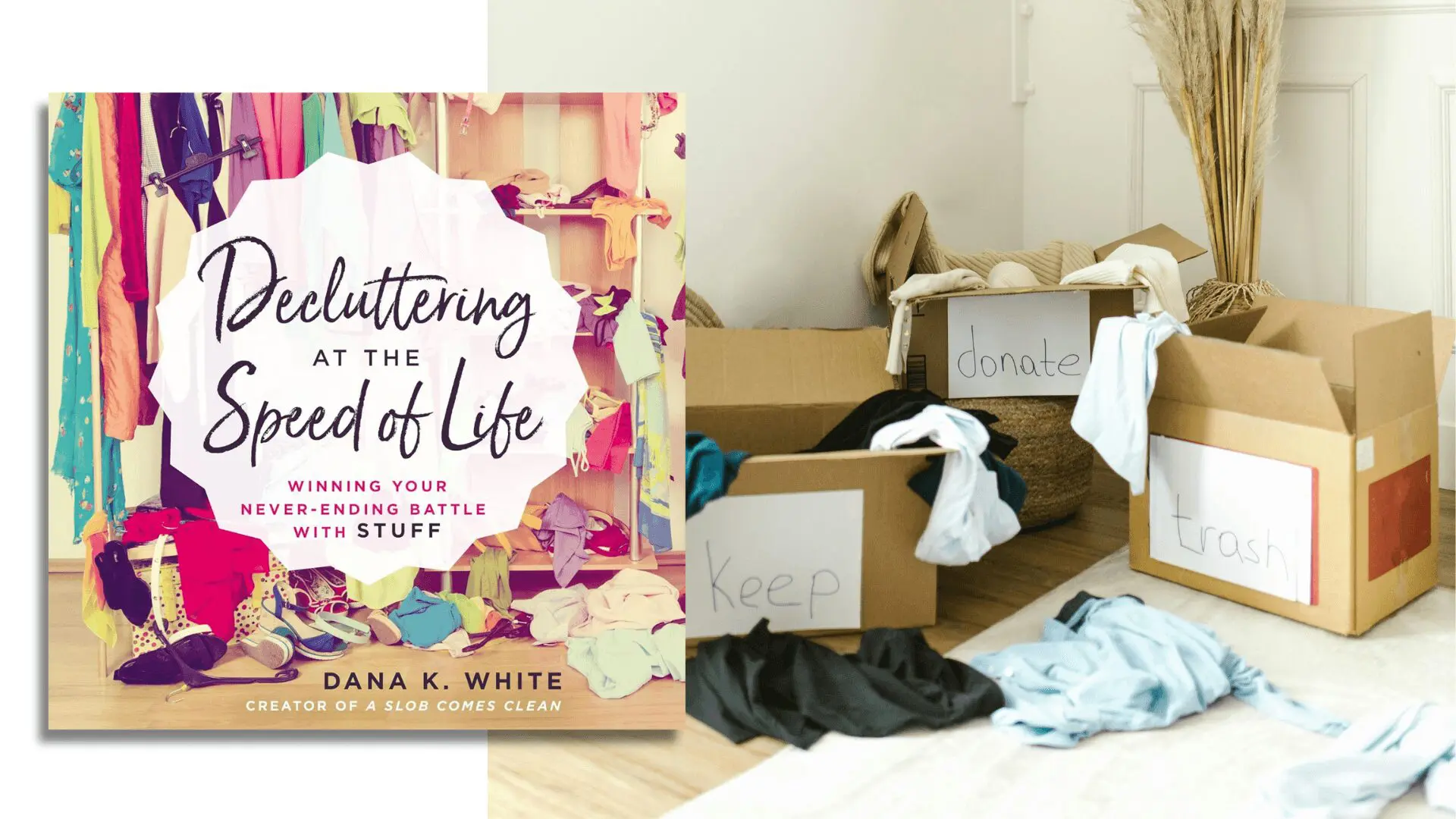
In Decluttering at the Speed of Life, Dana provides an essential guide for navigating the emotional and practical challenges of getting rid of clutter. Drawing from her personal experience and her work with thousands of readers and listeners, she crafts a clear, compassionate, and actionable blueprint designed to help people declutter at their own pace, with confidence and lasting results.
What Is Decluttering at the Speed of Life About?
This book is more than a checklist of tips. It is a guide to changing the way you think about clutter so you can finally beat it for good. Dana argues that the main barrier to decluttering is not time, money, or square footage. It is our mindset.
We hold onto gifts we do not love but feel guilty giving away, aspirational items for the person we wish we were, procrasticlutter that we tell ourselves we will get to eventually, and emotional attachments like family heirlooms and childhood toys. Instead of saying, “Just get rid of it all!”, Dana names these challenges, explains why they are hard, and offers simple, repeatable steps for making decisions.
The book’s promise is right there in the title: decluttering at the speed of life means you do not have to stop everything to purge your house. You can do it in real life, with the time and energy you actually have.
Clutter
It is not just a messy countertop or a packed garage. It is that creeping sense of stress, the frustration of never finding what you need, and the constant mental weight of unfinished tasks. It is the guilt over things you spent money on but do not use, and the tension of living in a space that does not feel peaceful or welcoming. Clutter is not just physical. It clutters your mind, drains your energy, and steals time you would rather spend on the people and activities you love.

Time to Downsize?
Discover the joy of letting go! Our guide to Downsizing helps you downsize with ease.
Key Concepts and Insights
Decluttering Isn’t One and Done
Dana emphasizes that clutter will always appear. Decluttering is not a single purge that magically solves everything forever. Instead, it is an ongoing skill that you practice over time. By learning and repeating a straightforward process, you can keep clutter at bay long-term without feeling overwhelmed. This mindset shift is essential, because many people get discouraged when clutter returns, thinking they failed. Dana reframes this by helping readers accept that maintaining a clutter-free home is a lifelong habit, not a one-time event, and I really appreciate how realistic this idea is because it removes the pressure to be perfect and gives you permission to see decluttering as an ongoing part of living in a space you love.
Emotional Resistance Is Real
Many books gloss over why it is so hard to let go of things, but Dana digs into these emotional barriers with empathy. She explains that we often keep items out of guilt for having spent money on them, or because they hold sentimental value connected to memories and loved ones. There is also the fear of needing something later, which can paralyze decision-making, as well as family expectations that make it hard to part with certain possessions. Dana does not dismiss these feelings. Instead, she offers practical, respectful ways to work through them so readers can move forward without feeling judged or forced, and this focus on emotional honesty really stands out because it acknowledges that decluttering is about much more than just stuff—it is also about understanding ourselves and what we truly value.
Your Home Is Unique
Dana is clear that cookie-cutter minimalist rules do not work for everyone. She rejects the idea that there is a single “correct” way to declutter. Instead, she encourages readers to consider their unique home, its size, layout, and purpose. She also acknowledges that life circumstances like kids, work demands, hobbies, or health needs will shape what is realistic. Decluttering should serve your life, not an idealized image of someone else’s. I think this is one of the most empowering parts of her message because it gives people permission to make choices that truly fit their own lives instead of chasing unrealistic ideals.
You Don’t Need Tons of Time
One of Dana’s most helpful ideas is the reminder that “decluttering is not organizing.” You do not have to wait for a free weekend or a perfect moment to start. Her method is designed for busy people who can only spare small windows of time. You can make meaningful progress in five-minute bursts, without elaborate systems, complicated sorting sessions, or perfectionist pressure. By simplifying the approach, Dana makes decluttering accessible and sustainable even for people who feel overwhelmed or short on time, and this idea really lowers the barrier to getting started because it feels manageable and encourages you to do what you can right now, even if it is just a little at a time.

Everyone Needs a Little Help Sometimes
There’s so much to know when it comes to lifestyle choices for Older Adults, it’s hard to know even where to begin. One way is to simply click on the button below and let one of our coaches give some guidance – at no cost to you.
Get Help NowThe Container Concept
A signature idea from Dana’s work is what she calls “The Container Concept.” She encourages readers to see their home as a container with limited space. Each shelf, drawer, and room is also its own container. These physical boundaries define how much you can reasonably keep. Instead of asking, “Do I want this?” she urges you to ask, “Do I have room for this?” This subtle shift is surprisingly liberating because it grounds decisions in real, visible limits. It helps people let go of excess without endless debate, making decluttering a straightforward, rational process that respects the actual capacity of your space, I find this concept so simple but powerful because it makes decluttering decisions clear and concrete, and it is easy to remember and use every day.
Highlights
Why You Need This Book
Dana knows her audience well. She does not waste time lecturing readers about why clutter is bad, because she understands you already know that. Instead, she speaks directly to the real feelings that bring someone to pick up this book: the frustration of living in a space that feels chaotic, the guilt over not keeping up, and the discouragement of past failed attempts to get organized.
She is refreshingly honest that people reading a decluttering book are usually not looking for theoretical reasons to care—they already care but feel stuck. Rather than adding to that overwhelm with unrealistic expectations, she offers reassurance and permission to start exactly where you are. Dana emphasizes that this book is for people who need practical, real-life help to finally see progress.
What I really like about this section is how it meets readers with empathy and zero judgment. It makes you feel understood instead of criticized, and it immediately sets a supportive tone that runs throughout the rest of the book.
Your Unique Home
This section challenges the myth that decluttering has to look the same for everyone, pushing back against those “one-size-fits-all” solutions often seen in organizing shows or minimalist manifestos. Dana makes the case that your home is unlike anyone else’s, and what works for another person might not make sense for you. She invites readers to take an honest look at their own space, considering the size of their home, the layout, storage limitations, and the way they truly use their rooms day to day.
She also emphasizes life circumstances. Whether you have small children, teenagers, roommates, or aging parents living with you, your needs will be different. Work-from-home setups, hobbies that require supplies, health challenges—these all shape what you can reasonably keep and how you need to store it. Dana wants readers to acknowledge these real-life factors instead of ignoring them or feeling ashamed that they don’t match an Instagram-perfect ideal.
What I really appreciate here is her respect for individual realities. Rather than imposing a rigid rule like “only own 100 things,” she encourages readers to tailor their decluttering decisions to support how they live best. It is a compassionate, practical approach that feels genuinely sustainable. You are not expected to become someone you are not or force your home to look like someone else’s. Instead, you’re invited to create a space that actually works for you and your family.
Tap Into your Home Equity
Need to raise some cash to pay for home improvements, or anything else? Get our Guide on Creative Ways to Tap Into Home Equity
Get our Guide!Decluttering in the Midst of Real Life
Dana is especially aware that most people cannot simply pause their lives to declutter everything at once. She understands that busy schedules, family responsibilities, and daily obligations make it difficult to commit long stretches of time to clearing clutter. In this section, she offers smart, doable strategies for working around the demands of kids, jobs, caregiving, and other real-world constraints.
She breaks down how to make meaningful progress even when you have only short windows of time, helping readers avoid the trap of thinking they need an entire weekend or vacation to get started. By giving permission to take small, consistent steps, Dana makes the process feel truly achievable. I think this realistic, flexible approach is one of the most valuable parts of the book, because it removes so many of the common excuses and opens up decluttering to anyone, no matter how busy they are.
Change Your Mind, Change Your Home
This section emphasizes that mindset is one of the biggest barriers to successful decluttering. Dana identifies common decluttering delusions—such as believing you will suddenly become someone who uses certain items regularly or that everything must be saved “just in case.” She explains how these thoughts fuel clutter and keep us stuck.
Dana challenges these perfectionist ideas and encourages readers to let go of fantasy selves—the imagined version of you who uses the bread machine every week or wears those heels to fancy events you never attend. Instead of trying to become someone else, she urges readers to be honest about who they actually are and what they truly use and need. I find this shift in perspective incredibly helpful. It relieves the pressure to live up to impossible standards and supports creating a home that genuinely serves the real you, making decluttering a deeply personal and affirming process.
Breaking Through Your Decluttering Delusions
Here, Dana dives into the specific lies and excuses that keep us stuck with too much stuff. She unpacks common thoughts like “I might need it someday,” “I paid good money for it,” and “I am going to fix it eventually.” She does not dismiss these concerns outright; instead, with her signature blend of humor and empathy, she gently dismantles these mental blocks.
Dana helps readers see how these beliefs weigh them down, creating guilt, stress, and inaction. She offers practical ways to move past them without feeling ashamed or wasteful. I think this section is especially powerful for anyone who has struggled with regret over wasted money or emotional attachments to objects, because it normalizes those feelings while still providing a clear, actionable path forward.
You Need a Winning Strategy
When it comes to navigating the ocean of resources for older adults, it helps – a lot – to have someone who can show you the way. Book a call with a coach to save time, money, and no small amount of frustration.
Click Here to Book a CallWorking It Out Room by Room
This is the book’s highly practical core, where Dana takes her big ideas and shows you exactly how to apply them in your own home. She explains her step-by-step decluttering process in clear detail, covering spaces like kitchens, bedrooms, closets, and garages. She teaches readers to avoid overwhelm by keeping decisions simple and repeatable.
Her process includes specific steps such as dealing with trash first, removing easy items, tackling “duh” clutter (things that are obvious), asking her two key decluttering questions, and making sure everything fits within its space. What I really like about this section is how it turns what can feel like a huge, daunting project into a series of small, achievable tasks. It gives readers a sense of momentum and confidence, making decluttering accessible even for those who have felt completely overwhelmed.
If you’re thinking about your home’s value in bigger ways, see our guide on Unlocking Home Equity for Seniors.
Helping Others Declutter
In the final section, Dana offers thoughtful, realistic guidance for helping other people declutter—a situation that can be especially challenging. She addresses scenarios like adult children helping parents downsize, partners with different tolerance levels for clutter, and parents wanting to teach these skills to their kids.
She acknowledges the emotional sensitivity of dealing with someone else’s possessions and emphasizes the importance of respect, patience, and communication. Instead of pushing or forcing change, she suggests ways to offer help that honor the other person’s feelings and ownership of their things. I think this thoughtful approach really sets her apart. It recognizes that clutter is not just about stuff—it is about our relationships with people and memories, making this section a valuable resource for anyone facing these delicate situations.
Clutter Will Always Come Back
Dana ends with an honest truth: no matter how thorough your decluttering efforts are, clutter is never truly gone forever. As long as you are living, using things, and bringing new items into your home, new clutter will inevitably appear.
But instead of presenting this as failure, Dana reframes it as a normal, manageable part of life. She reassures readers that by practicing her methods regularly, dealing with clutter will get easier over time. You will learn to spot it sooner, make decisions more quickly, and maintain control with less effort.
By adopting her mindset and simple process, the ongoing task of decluttering becomes much less overwhelming. Instead of giant, exhausting purges once or twice a year, you can handle small messes as they come, keeping your home functional and peaceful most of the time. It is a practical, sustainable approach that accepts real life—and gives you tools to manage it gracefully.
Medicare Made Simple
Medicare can be complicated – so let us break it down for you! Get our quick and easy guide, Medicare Made Simple!
Get the Guide!Who Should Read This Book?
This book is an excellent choice for busy adults who feel overwhelmed by too much stuff and want realistic strategies for managing it. It is especially helpful for parents trying to balance family clutter while still maintaining a livable, welcoming home.
It is also well-suited for people who struggle with emotional attachments to their belongings, offering compassionate guidance on how to let go without guilt. If you dislike minimalist extremism but still want to simplify your space in a practical, sustainable way, Dana’s approach will resonate.
Anyone who has tried and failed to declutter before will find her methods refreshingly doable and supportive. It is particularly good for readers who feel stuck about where to start, want permission to go slowly, or need help overcoming emotional roadblocks that have stopped them in the past.
Conclusion
Decluttering at the Speed of Life is not just another how-to manual full of checklists and rigid rules. It is a genuine mindset shift that meets readers exactly where they are. Dana K. White gives readers permission to be realistic about their homes and their lives, offering compassionate, practical strategies that actually work.
Her book provides clear tools for overcoming the emotional resistance that so often keeps us stuck. She offers a simple, repeatable process that you can use again and again to make real, lasting progress—even if you are busy, overwhelmed, or have tried and failed before.
Importantly, Dana does not promise a perfect, forever clutter-free home. Instead, she offers a sustainable approach that helps you keep clutter manageable no matter what life throws at you. By accepting that clutter will always try to creep back in, you can learn to handle it with less stress and less time.
If you are tired of feeling overwhelmed, discouraged by organizing systems that never last, or frustrated with beating yourself up over the state of your home, this book is a refreshingly honest and helpful guide. It is for anyone ready to take real steps toward a calmer, more functional space—at a pace that truly fits real life.
For those looking at long-term options, see our Quick Guide on Reverse Mortgages to understand how your home can support your future.