
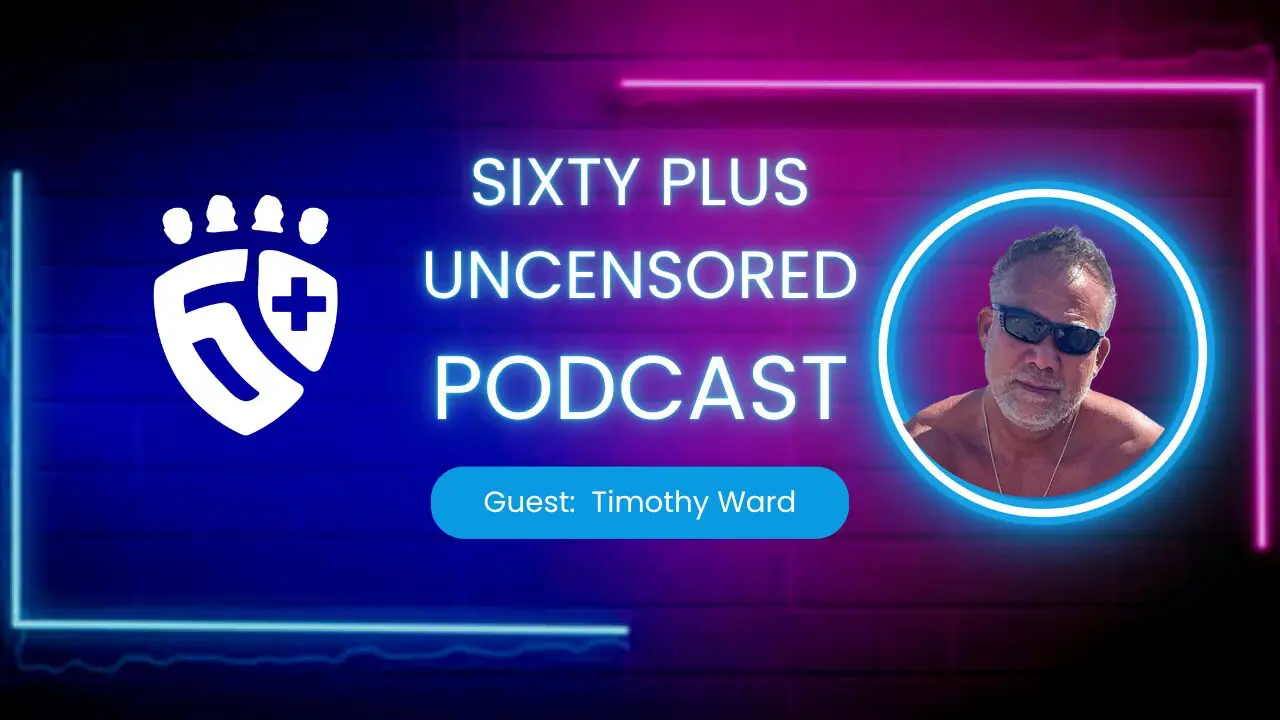
In this episode of Sixty Plus Uncensored, host Seb Frey sits down with fitness and longevity expert Tim Ward to explore a question that quietly sits in the background for many people: Is physical decline simply part of getting older, or is it something we’ve learned to accept without fully examining it? With more than three decades of experience in exercise science, Tim brings a perspective that is both practical and steady. His approach is not built on extremes or quick fixes, but on understanding how the body works and making consistent choices that support long-term strength and independence. Tim lays out what the science says about aging gracefully, and what most people get wrong.
A Path Shaped by Experience
Tim Ward’s path into fitness and longevity was not shaped in a typical or structured way. His early years included significant challenges, and like many people, he found a sense of stability through movement. Sports and physical activity became more than just something to do, they became a place where effort produced a clear outcome. That connection stayed with him as he grew older, even before he fully understood how to train effectively.
As he moved into his teens and twenties, his approach reflected what many people still follow today: push harder, do more, and expect results to follow. This often led to injuries and plateaus. Without a clear understanding of technique, recovery, or the underlying science, effort alone could only take him so far. It was not until he encountered a trained exercise scientist that things began to shift. That conversation introduced him to a deeper level of understanding, one that connected movement with physiology, structure, and long-term outcomes.
From there, his curiosity took over. He spent years learning, refining, and working alongside experts in the field. Over time, his approach became less about intensity and more about precision. That shift, from effort alone to informed action, is something many people can relate to, especially those who have tried to stay active but never quite saw the results they expected. In many ways, that transition is where real progress begins.
Many people find that building a healthier routine starts with simple movement, and Walking for Health: How Many Steps Should Seniors Aim For? offers a practical way to ease into consistent activity.
The Direction of Aging: Growth or Decline
One of the most useful ideas Tim shares is that the body is always moving in a direction. It is either adapting toward growth or gradually moving toward decline. This does not happen suddenly. It is shaped by patterns that build over time, often quietly, without immediate signs.
For many people, the effects of these patterns become more noticeable later in life. Tasks that once felt simple may begin to require more effort. Recovery takes longer. Energy levels shift. These changes can feel like they appeared quickly, but they are usually the result of years of accumulated habits, both positive and negative.
What makes this idea important is that direction can change. The body remains adaptable, even in later decades. When given the right conditions, through movement, nutrition, and rest, it can respond in meaningful ways. Strength can improve, mobility can return, and everyday function can become easier again. The key is not perfection, but consistency. Over time, small adjustments can begin to shift the overall trajectory.
This idea connects closely with The Science of Staying Sharp: How to Keep Your Brain Young After 60, which explores how both physical and mental habits shape long-term well-being.
Why Effort Alone Isn’t Enough
Many people feel like they are trying to take care of themselves, yet still experience limited progress. They go to the gym, stay somewhat active, and make occasional adjustments to their diet. Despite this, they may still feel tired, stiff, or stuck in place. This often leads to the assumption that decline is simply part of aging.
Tim suggests that the issue is rarely a lack of effort. More often, it is a lack of clarity. There is an overwhelming amount of information available, much of it conflicting. Without a clear framework, people may spend time doing things that feel productive but do not actually move them forward. Over time, this creates frustration and, in some cases, discouragement.
What tends to make the difference is understanding how the pieces fit together. Exercise, nutrition, and recovery are not separate efforts, they work as a system. When one is missing or misapplied, the others are affected. Once people begin to understand this connection, their efforts become more effective, even without increasing the amount of time they spend. In that sense, better direction often matters more than doing more.
Nutrition: Reducing What Holds You Back
Nutrition is often approached in extremes, but Tim brings it back to something more practical: awareness. Many of the foods commonly consumed today contain ingredients that contribute to long-term inflammation. This does not always show up immediately. A single meal rarely feels harmful. But over time, repeated exposure to processed foods, excess sugar, and artificial additives can begin to affect how the body functions.
These effects tend to build gradually. Increased inflammation can contribute to joint discomfort, reduced energy, and metabolic issues. By the time these symptoms become noticeable, they are often the result of patterns that have been in place for years. This is why small, consistent adjustments can be so meaningful. Even reducing a portion of these inputs can begin to change how the body responds over time.
At the same time, nourishment is just as important as what is removed. The body needs adequate nutrients to function properly. Without them, energy, recovery, and strength are all limited. Rather than focusing on restriction, the goal becomes supporting the body with what it needs while reducing what works against it. Over time, this creates a more stable foundation for overall health.
A more balanced approach to eating is also discussed in Intermittent Fasting for Older Adults: A Balanced Guide for Healthy Aging, where small, consistent changes can support energy and recovery.
Understanding Supplementation More Thoughtfully
Supplementation is an area where many people rely on general advice rather than personal understanding. It is common to take vitamins or other products based on trends or recommendations without knowing whether they are actually needed. While this approach is understandable, it often leads to inconsistent results.
Tim emphasizes a more targeted approach. By understanding what the body is lacking, often through blood testing, it becomes possible to make more informed decisions. This allows supplementation to serve a clear purpose, rather than acting as a guess. For some, this might reveal deficiencies that are limiting energy, recovery, or overall performance.
That said, supplementation is not meant to replace good habits. It works best as a support system, filling in gaps that nutrition alone may not cover. When used thoughtfully, it can help the body function more efficiently. The key is not to take more, but to take what is actually needed.
A Simple Framework That Brings Everything Together
To simplify the complexity of health, Tim introduces what he calls the “fitness quadrant.” This framework organizes the essentials into four areas: resistance training, cardiovascular exercise, nutrition, and rest. Each plays a role, and none can be ignored without affecting the whole.
Resistance training helps maintain and build muscle, which becomes increasingly important with age. Cardiovascular exercise supports heart and lung function. Nutrition provides the building blocks for energy and recovery. Rest allows the body to repair and adapt. When these four areas are balanced, the body is better able to respond and improve.
What makes this framework useful is that it removes guesswork. Instead of focusing on isolated efforts, it provides a structure that connects everything. This makes it easier to understand where adjustments are needed and how to move forward in a more balanced way.
For those looking to support daily function and independence, The Best Low-Impact Exercises for Adults Over 60 provides practical ways to incorporate strength and movement safely.
The Balance Between Cardio and Strength
Cardiovascular exercise is often the most familiar form of activity, and for many people, it is the most enjoyable. It provides an immediate sense of progress and can improve mood and endurance. However, relying on cardio alone can create an imbalance, particularly when it comes to maintaining muscle.
Tim explains that excessive cardio, especially without proper nutritional support, can lead to muscle breakdown over time. This happens because the body may begin using muscle tissue as a source of energy during prolonged activity. While this process is natural, it becomes a concern when it outweighs muscle maintenance.
The solution is not to avoid cardio, but to balance it with strength training. By including both, the body can maintain muscle while still benefiting from improved cardiovascular health. This balance allows for a more complete approach, where one form of exercise supports the other rather than working against it.
Doing Less, But Doing It Better
A common belief is that staying healthy requires long hours in the gym. For many people, this becomes a barrier. It feels difficult to maintain, especially alongside other responsibilities. Tim offers a different perspective, one that focuses on doing less, but doing it more effectively.
He suggests that a few hours per week, when structured properly, can be enough to create meaningful change. This includes focused strength training, moderate cardio, and time for recovery. The emphasis is not on volume, but on quality and consistency.
This approach makes the process more sustainable. It allows people to build routines that fit into their lives without feeling overwhelmed. Over time, this consistency becomes more valuable than intensity. It is not about doing everything, but about doing what matters.
This sustainable approach aligns with Creating a Fulfilling Lifestyle After Retirement, where consistency and balance often matter more than intensity.
Small Changes That Build Over Time
Throughout the conversation, there is a steady emphasis on gradual improvement. Rather than looking for immediate transformation, the focus is on making adjustments that can be maintained over time. These changes may seem small at first, but their impact grows as they accumulate.
This might include refining how workouts are structured, becoming more aware of food choices, or allowing for proper recovery. Each of these contributes to a larger shift. Over weeks and months, they begin to change how the body feels and functions.
What makes this approach effective is that it is realistic. It does not depend on short bursts of motivation. Instead, it creates a path that can be followed consistently. In the long run, this is what leads to meaningful and lasting change.
Shifting the Way We Think About Aging
Aging is often associated with limitation, but much of what people experience is influenced by how they care for their bodies over time. While certain changes are natural, many of the challenges commonly associated with aging are not inevitable.
Maintaining strength and mobility is less about performance and more about function. It is about being able to move comfortably, stay independent, and continue participating in everyday life. This includes simple but meaningful things, such as walking without discomfort, carrying groceries, or spending active time with family.
When viewed this way, health becomes less about achieving a specific outcome and more about preserving quality of life. It shifts the focus from what is lost to what can still be maintained and even improved.
A Practical Way to Begin
For someone looking to take the first step, the process does not need to be complicated. It can begin with a few thoughtful adjustments. Becoming more aware of nutrition, adding basic strength training, and allowing time for recovery are all reasonable starting points.
From there, changes can be built gradually. There is no need to overhaul everything at once. What matters most is starting with intention and continuing with consistency. Over time, these steps begin to form a routine that supports long-term health.
Starting small and building gradually is also a key theme in How to Stay Positive and Motivated as You Age, which offers simple ways to stay engaged and committed over time.
Conclusion
The conversation with Tim Ward offers a steady and practical way to think about health and aging. It moves away from extremes and focuses instead on what is sustainable, realistic, and effective over time. Rather than chasing quick results or dramatic transformations, it emphasizes understanding how the body works and supporting it in ways that are consistent and manageable. The body, even later in life, remains more adaptable than many people expect. With the right inputs, through movement, nutrition, and recovery, it can continue to respond, adjust, and improve.
What stands out most is the shift in perspective. Instead of trying to reverse time or hold on to a past version of yourself, the goal becomes something more meaningful. It becomes about maintaining the ability to move well, stay independent, and continue participating in the moments that matter. Whether that means keeping up with family, staying active in daily routines, or simply feeling more capable in your own body, these outcomes often carry more value than any single fitness milestone.
In the end, the path forward does not require perfection. It begins with small, informed choices, adjustments that may seem simple but become powerful when repeated over time. As those choices begin to add up, they create a different experience of aging, one that is not defined by limitation, but by the ability to continue living with strength, clarity, and purpose.