

Seb Frey is a REALTOR® and founder of Team Sixty Plus, a curated network connecting older adults and their families with trusted professionals across California. With decades of experience helping homeowners 60+ navigate major life transitions—like downsizing, aging in place, or passing on a legacy—Seb brings deep market knowledge, a compassionate approach, and a commitment to simplifying complex decisions. When he’s not advising clients, he’s sharing expert insights on real estate, retirement strategies, and quality-of-life resources for the 60+ community.
Introduction
We all have stuff. Boxes in the attic. Drawers that barely close. Closets filled with clothes we haven’t worn in years. And yet, when we think about cleaning it all out, we hesitate. Why? Because it’s not just stuff. It’s our memories, our identity, our family’s legacy.
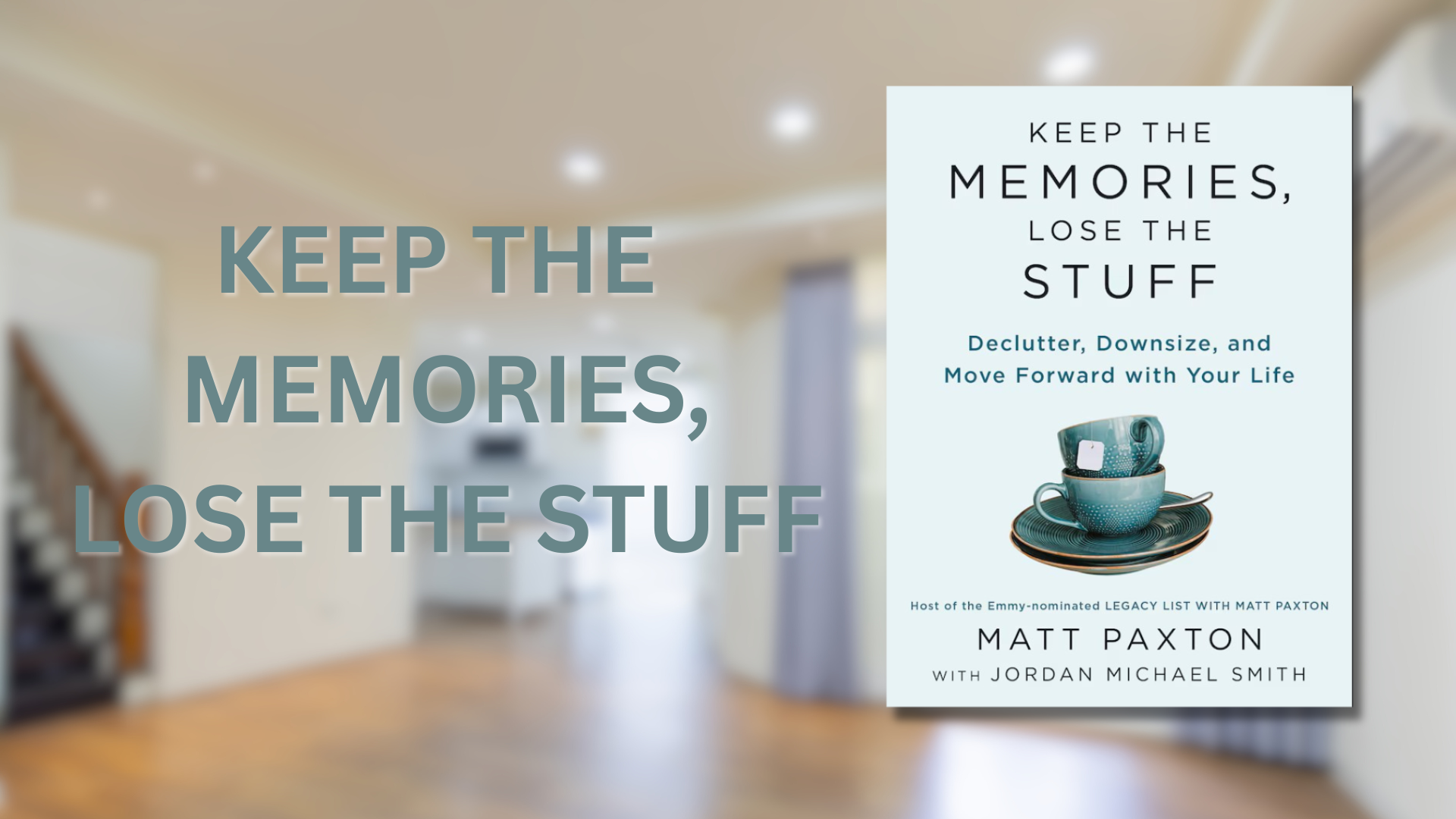
In Keep the Memories, Lose the Stuff, author and decluttering expert Matt Paxton offers a compassionate and effective method for tackling the emotional journey of letting go. With more than 20 years of experience helping people downsize and declutter, Paxton combines real-life stories, humor, and practical tools to guide readers through the process. Whether you’re moving, downsizing, dealing with a loved one’s estate, or simply tired of living in clutter, this book is a must-read.
Let’s dive into this heartfelt, helpful, and surprisingly funny guide, and find out what makes it so effective.
Family Guide for Aging in Place
For Families with Older Adults who are looking to help with a Parent with Aging in Place!
Get the GuideAbout the Author: Who is Matt Paxton?
Matt Paxton isn’t your typical organizing guru. He didn’t start out decluttering homes. His journey into this line of work began after the sudden loss of his father and stepfather, followed by his grandfather, all within the span of a year. Suddenly, he was tasked with sorting through a house full of belongings and memories. The emotional weight of that experience shaped his unique approach.
Career Highlights:
- Star of A&E’s “Hoarders” for seven seasons
- Host of PBS’s Emmy-nominated “Legacy List with Matt Paxton”
- Over 20 years of experience helping families downsize
- Partnered with AARP to write this book for a broad, aging adult audience
Paxton’s combination of personal experience, professional wisdom, and deep empathy makes him a trustworthy and relatable guide through this emotionally fraught process.
Why This Book Matters Now
In a world where consumerism has led to chronic clutter and “stuff” accumulation, there’s a growing desire, especially among aging adults, to simplify. Whether it’s due to a move, an inheritance, or a desire for peace of mind, many people are ready to downsize but don’t know where to start.
Some key reasons this book is relevant today:
- Baby boomers are reaching retirement age and downsizing in large numbers.
- Millennials and Gen X are inheriting homes and belongings, and the overwhelming task of sorting them.
- Minimalism and mental wellness trends emphasize that less clutter = less stress.
- The COVID-19 pandemic forced many to re-evaluate their homes, priorities, and lifestyle.
Paxton doesn’t just tell you to “let it go” he walks you through the why and the how.
The Heart of the Book: Letting Go Without Losing Yourself
“It’s not about the stuff, it’s about the stories.”
This quote could serve as the thesis of the entire book. Matt Paxton understands that for many, getting rid of things is emotionally painful because these objects represent loved ones, memories, or parts of ourselves.
Common Scenarios Paxton Addresses:
- You’re helping a parent move into assisted living.
- You’re downsizing your family home after the kids have left.
- You’ve inherited a house and don’t know what to keep or toss.
- You’re tired of clutter but emotionally stuck.
Paxton’s Core Philosophy:
- Keep a handful of meaningful items.
- Let go of things that don’t serve your current life.
- Capture memories and stories, not just stuff.
This isn’t a cold, minimalist purge, it’s about honoring the past while making room for the present and future.

Time to Downsize?
Discover the joy of letting go! Our guide to Downsizing helps you downsize with ease.
The Step-by-Step Approach: Practical and Empathetic
Paxton’s decluttering system is clear, structured, and forgiving. He doesn’t overwhelm you with perfectionism. Instead, he encourages progress over perfection.
Here’s an outline of his process:
1. Start with a Purpose
- Ask: Why are you downsizing? (e.g., moving, mental peace, legacy)
- Use that purpose to guide your decisions.
2. Create a Legacy List
- A list of the top 5–10 items that tell your life story.
- These are the non-negotiables, what you keep or pass on with intention.
3. Divide and Conquer
- Break your home into manageable zones.
- Start with easier areas (e.g., bathroom) before tackling sentimental spaces like the attic.
4. Sort into 4 Categories
- Keep
- Donate
- Sell
- Trash
Paxton calls this the Four Box Method, and it works because it’s simple and scalable.
5. Capture the Memory, Not the Item
- Take a photo, record a story, or write about the memory.
- This helps ease the emotional burden of letting go.
6. Bring In Help
- From friends to professional organizers, you don’t have to do this alone.
- Paxton even discusses how to have tough conversations with family.
Emotional Roadblocks: Tackling the Tough Stuff
Paxton doesn’t shy away from the emotional resistance people feel when decluttering. He addresses key psychological hurdles:
1. Guilt
- “Mom would want me to keep this.”
- Paxton says: “Your loved one wanted you to be happy, not burdened.”
2. Fear
- “What if I need this later?”
- Reality: If you haven’t used it in years, you probably won’t.
3. Sentimentality
- “This was my kid’s favorite toy.”
- Try: Take a photo, write a note, then donate it so another child can enjoy it.
4. Perfectionism
- “I have to do this right.”
- Paxton’s answer: “Just get started. Done is better than perfect.”
These real human fears are met with compassion, not judgment.
Real-Life Stories: Where the Book Truly Shines
One of the most powerful features of this book is the stories. Paxton shares anecdotes from families he’s worked with, some funny, some heartbreaking, all relatable.
Example: The Cluttered Dining Room
A woman hadn’t used her dining room table in 15 years because it was piled with her late husband’s belongings. Paxton helped her sort through the items, keep the most meaningful ones, and reclaim her space. Within a month, she was hosting dinners again.
These stories show that decluttering isn’t just about throwing things away, it’s about reclaiming your life.
Tap Into your Home Equity
Need to raise some cash to pay for home improvements, or anything else? Get our Guide on Creative Ways to Tap Into Home Equity
Get our Guide!Collaboration with AARP: Tailored for an Older Audience
This book was created in partnership with AARP, and it shows. While the advice is relevant for all adults, it is especially useful for:
- Seniors planning for retirement or senior living
- Adult children helping parents downsize
- Executors of estates dealing with inherited belongings
There’s also a strong emphasis on leaving a legacy, not just in objects, but in stories and values.
What Makes This Book Stand Out
✅ Empathy First
This isn’t a harsh, no-nonsense cleaning guide. It’s written with warmth, humor, and deep respect for the emotional process of letting go.
✅ Proven Techniques
From his years on Hoarders and Legacy List, Paxton has seen it all. His methods are battle-tested.
✅ Stories That Stick
The real-life anecdotes make the book memorable, emotional, and even entertaining.
✅ Practical Tools
Checklists, step-by-step guides, and visualizations help you take action.
Room for Improvement? A Few Minor Notes
While the book is overall excellent, here are a few things to keep in mind:
- It leans more on stories than on data. If you prefer hard statistics, you might want more structure.
- The advice is broad; people looking for hyper-detailed organization systems (à la Marie Kondo) may find it a bit loose.
- If you’re not emotionally attached to your stuff and just want to clean, this might feel too sentimental.
Still, for its intended audience, these are small quibbles in an otherwise strong book.
Retirement Planning for Older Adults
Are you a little late to the retirement planning game? Get this comprehensive guide and get caught up!
Get the Guide!Conclusion: A Gift for Anyone Ready to Move Forward
Keep the Memories, Lose the Stuff is more than a decluttering manual. It’s a guide to emotional freedom, a bridge between past and future, and a reminder that our memories live within us, not in boxes or bins.
Matt Paxton’s voice is that of a wise friend, understanding, encouraging, and just cheeky enough to keep things light. His method works not just because it’s simple, but because it’s human.
Who should read this book?
- Adults helping parents downsize
- Seniors transitioning to smaller homes or assisted living
- Executors of estates or family belongings
- Anyone drowning in clutter who doesn’t know where to begin
Final Thoughts:
If you’ve been waiting for the right time to declutter, this book might be your sign. The sooner you start, the sooner you can enjoy a lighter, more intentional life.