
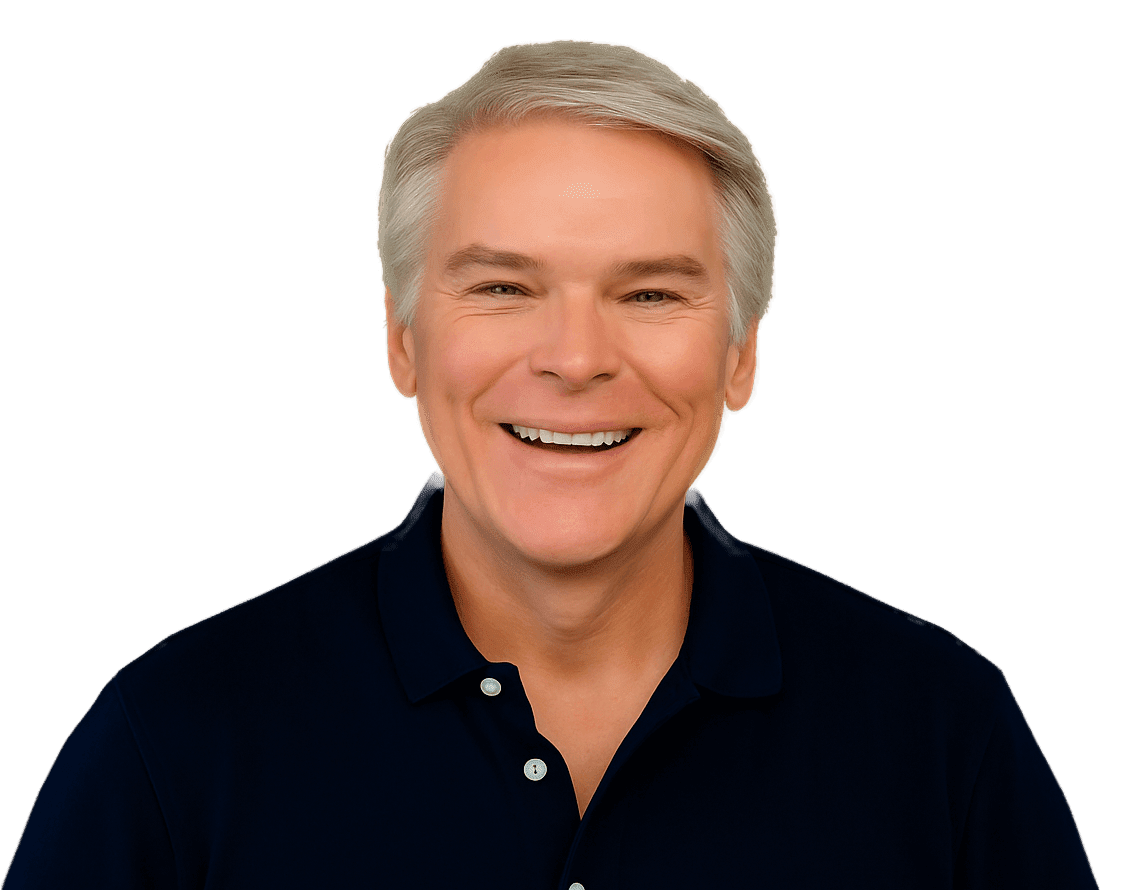
Seb Frey is a REALTOR® and founder of Team Sixty Plus, a curated network connecting older adults and their families with trusted professionals across California. With decades of experience helping homeowners 60+ navigate major life transitions—like downsizing, aging in place, or passing on a legacy—Seb brings deep market knowledge, a compassionate approach, and a commitment to simplifying complex decisions. When he’s not advising clients, he’s sharing expert insights on real estate, retirement strategies, and quality-of-life resources for the 60+ community.
Key Takeaways
- The view of aging and life stages is outdated, as people now live much longer than before but societal systems haven’t caught up.
- old of finishing work around 65 and fading out fit today’s extended lifespans, many in a kind of limbo.
- Older adults are often underval and blocked from further, despite being capable eager to keep working and sharing their.
- Ignoring the potential older is not just unfair but also a missed economic opportunity, especially given shortages across industries.
- Society a major rethink of how we approach life and unlock the full potential of longer, vibrant lives.
Here’s a question I want you to sit with for a second.
You spent the first 20-odd years of your life in school. Then you worked hard for 40 years or so. And now you’re supposed to… what, exactly? Fade out? Putter around? Hand the baton to the next generation and call it done?
Stanford University doesn’t think so. And frankly, neither do I.
Last month, more than 200 leaders from higher education, government, business and civil society gathered at the Stanford Graduate School of Business for the Century Summit VI, hosted by the Longevity Project in partnership with the Stanford Center on Longevity. Another 1,900 people tuned in online. The headline of the entire two-day event could be summarized in one devastating sentence from Stanford’s own Laura Carstensen, founding director of the Stanford Center on Longevity:
“We added 30 years to life — without redesigning how life works.”
That’s the whole story. That’s the tension every single one of my clients feels when they walk into their 60s, 70s, or 80s wondering why they feel out of step with every system and institution around them. It’s not them. It’s the system. And the smartest minds in longevity research are finally saying so out loud, on a very big stage.
The Outdated Map We’re All Still Following
Think about the life course most of us inherited as a blueprint. School until your mid-20s. Work like mad through your 30s, 40s, and 50s. Retire around 65. Done.
That model was designed for a world where most people didn’t live much past their mid-70s. It made a certain brutal kind of sense when the average lifespan was dramatically shorter. But life expectancy has grown by roughly 30 years over the past century. And yet the systems built around that shorter life — education, career ladders, retirement policy, healthcare, even housing — haven’t budged.
That is what the Stanford Center on Longevity calls the “New Map of Life” problem. The old map points to destinations that no longer exist, and ignores the vast new territory that’s opened up.
What does that mean in practice? It means millions of people in their 60s are caught in a profound institutional no-man’s land. They’re too young to be “done,” but the systems around them treat them like they are. Their expertise is undervalued. Their desire to keep contributing is dismissed or actively blocked. And the retirement money they saved, in many cases, wasn’t calculated for a life that might run another 25 to 30 years beyond their last paycheck.
This isn’t a personal failure of planning. It’s a structural failure of imagination — at the societal level.
Maximizing Your Social Security
Many People Miss Out on $100,000+ In Social Secuirty Benefits! Don’t be one of them. Our Clear and Complete Guide Explains It All
Get the Guide!The Ageism Tax: What It’s Costing Everyone
One of the most striking conversations at the Summit involved the economic cost of ignoring older workers.
Research discussed there shows that older employees tend to show up more consistently, carry deep institutional knowledge, and perform at levels that match or exceed their younger colleagues. And yet age discrimination remains stubbornly common in hiring and promotions. The Wharton School’s Peter Cappelli cited AARP research finding that a majority of retirement-age adults would prefer to keep working in some capacity — but only a fraction ever land roles that actually match what they can do.
Meanwhile, employers across virtually every sector are complaining about labor shortages.
Read that again. Employers can’t find enough people. And millions of experienced, capable older workers can’t find jobs that use their skills. That is not a supply and demand problem. That is a bias problem wearing a business suit.
AARP’s Lina Walker put it plainly at the Summit: mixed-age teams consistently outperform homogeneous ones because they combine institutional knowledge, emotional intelligence, ethical judgment, and technical agility. In other words, the older workers aren’t the dead weight. They’re often the anchor.
Here in Silicon Valley, where we tend to worship at the altar of disruption and the fresh face, this message is especially important. The region that prides itself on innovation has one of the most persistent blind spots when it comes to leveraging the people who actually built the systems that power the modern economy. The 60-something engineer who shipped software in the ’90s isn’t obsolete. She’s a competitive advantage — if anyone bothers to notice.
For those of us in this demographic, the practical implication is real: your value in the workforce is not declining. The systems around you are just slow to catch up to that truth.

got
questions?
AI Is Changing the Game — But Not the Way You Think
Artificial intelligence was everywhere at the Summit, which surprised no one. But what might surprise you is the nuance the conversation had.
The popular narrative is that AI is coming for jobs, and older workers will be the first casualties because they “can’t adapt.” The researchers at the Summit pushed back hard on that story. Despite the breathless headlines, there is currently limited hard evidence of widespread AI-driven job elimination. What’s actually happening is faster: skills are shifting, and the need for continuous reskilling is accelerating across every age group and profession.
But here’s the twist that I found genuinely fascinating. As AI gets better at the cognitive, routine, and even analytical parts of work, the premium on things like human judgment, ethical reasoning, and contextual intelligence goes up. Those are not skills you develop quickly. They are skills that accumulate over a career. Which means, counterintuitively, AI may actually be raising the market value of experienced older workers — not reducing it.
AI also has real promise in making learning more accessible for adults who are working full time or managing caregiving responsibilities. Several Summit speakers described AI tools that can deliver personalized coaching and feedback at a fraction of the cost of human coaches. That’s a genuine democratization of learning, and it matters for the 60+ population because continuing education and skill development don’t have to be reserved for people who can spend two years back in a classroom.
The Summit’s consensus on AI wasn’t anti-technology. It was pro-intentionality. Use the tools. But don’t let them replace the human connection that makes learning and working meaningful in the first place.
We’re All In This Together
What “Peak Compression” Means for the 60+ Generation — and Their Kids
One of the sharpest concepts to come out of the Summit is what participants called “peak compression.” This is the midlife experience of simultaneously managing career demands, raising or supporting children, and caring for aging parents. It’s the sandwich generation phenomenon, and it hits hard in your 40s and 50s.
But here’s what doesn’t get talked about enough: the ripple effects of peak compression land directly on the 60+ generation. When adult children are stretched thin by their own career pressures and caregiving demands, decisions about aging parents get made reactively, under pressure, without enough time or information. The family suddenly has to figure out housing, healthcare, finances, and logistics all at once, while everyone is already running on empty.
That’s a dynamic I see play out constantly in my work as a Seasoned Living Strategist serving Silicon Valley and Santa Cruz County. Families that have the important conversations early — about housing preferences, financial realities, what “independence” actually looks like in the next phase of life — navigate transitions dramatically better than those who wait for a crisis.
The structural solutions the Summit envisions (better retirement policy, more flexible work options, more supported caregiving pathways) are real and necessary. But while we’re waiting for institutions to catch up, families need to be having the conversations that institutions aren’t having for them.
If you’re curious about what those conversations look like in practice and how housing decisions fit into a longer-term aging strategy, this overview of senior housing options in Silicon Valley and Santa Cruz County on SebFrey.com is a solid place to start thinking.
Medicare Made Simple
Medicare can be complicated – so let us break it down for you! Get our quick and easy guide, Medicare Made Simple!
Get the Guide!Reinvention Is Not a Detour. It’s the New Route.
One of the most liberating reframes from the Summit is the idea that cycles of learning, work, and reinvention are not failures of planning. They are the actual map of a long life, lived well.
The old linear model implied that if you were retraining in your 50s, or changing careers in your 60s, or picking up a new credential in your 70s, something had gone wrong. You’d fallen off the expected track.
The “New Map of Life” says that track was never realistic in the first place.
Stanford’s own data from the EdSHARe longitudinal research project found that people who maintained intellectual rigor and continued learning throughout adulthood showed stronger career outcomes and higher cognitive resilience well into later life. Early academic habits appeared to influence health outcomes decades later. The return on investing in your brain doesn’t have a shelf life.
For the 60+ community, this is incredibly validating. If you’re pursuing a new passion, exploring a business idea, going back to school, or simply staying deeply engaged with the world around you, you’re not being eccentric. You’re doing exactly what the science suggests is optimal. Reinvention at 65 isn’t a Plan B. It might actually be the best version of Plan A.
Family Guide for Aging in Place
For Families with Older Adults who are looking to help with a Parent with Aging in Place!
Get the GuideThe Housing Angle Nobody’s Talking About
The Summit was focused on work and learning, but everything it described has a housing dimension that I think deserves a spotlight.
The “New Map of Life” doesn’t just require a rethink of careers and education. It requires a rethink of where and how people live. A 30-year retirement (which is what many people are looking at today) is not a single phase. It’s multiple phases with different needs, different capacities, and different priorities.
That means the house you retire into at 65 may not be the right house at 75. Or 85. And the decision about whether to stay in your family home, downsize, relocate, or transition to a different kind of community isn’t just a financial calculation. It’s a lifestyle and longevity calculation.
I talk to clients regularly who are making housing decisions based on a model of aging that looks like the old 20th-century life course. Short retirement. Declining trajectory. Minimize costs. Get out of the way.
What the Stanford research is telling us is that model is obsolete. A longer, more engaged, more purposeful later life requires housing that supports engagement, community, and optionality. Right-sizing your home at the right time isn’t giving up. It’s strategic. It frees up capital, reduces the burden of maintenance, and often moves you closer to the things that actually fuel the kind of active longevity the Stanford researchers are talking about.
Tap Into your Home Equity
Need to raise some cash to pay for home improvements, or anything else? Get our Guide on Creative Ways to Tap Into Home Equity
Get our Guide!So What Do You Do With All This?
Here’s where I’ll be direct with you, because that’s kind of my thing.
The Stanford Century Summit was inspiring. The research is real and important. But inspiration without action is just a nice feeling that fades by Tuesday.
So here are some actual questions worth asking yourself in the next week:
Do you have a current picture of your housing situation’s fit with the next 10 to 20 years of your life? Not just financially, but practically and emotionally?
Are you having honest conversations with your family about what the next phase looks like, or are you all avoiding the subject because it feels uncomfortable?
Are you staying engaged intellectually and professionally in ways that align with what the research shows drives longevity and cognitive health?
Are the financial plans you made years ago still calibrated for a life that might run significantly longer than the models assumed?
These aren’t rhetorical questions. They’re the conversations I have with clients every week. And they’re the ones the Stanford researchers are essentially begging the country’s institutions to start having at scale.
The institutions may move slowly. You don’t have to.

Time to Downsize?
Discover the joy of letting go! Our guide to Downsizing helps you downsize with ease.
The Bottom Line
We are living through a genuine transformation in what it means to age in America. The old scripts are breaking down. The research out of Stanford and institutions like it is pointing toward a more expansive, more engaged, more purposeful model of later life. One where 60 isn’t the beginning of the end. It’s the beginning of a different chapter that, if you play it right, can be one of the most interesting ones in the book.
That’s the world Team Sixty Plus exists to serve. And it’s why I believe that the work I do helping people navigate housing, financial strategy, and major life transitions in their 60s, 70s, and beyond has never mattered more.
The map is being redrawn. Let’s make sure you know where you’re going.
