

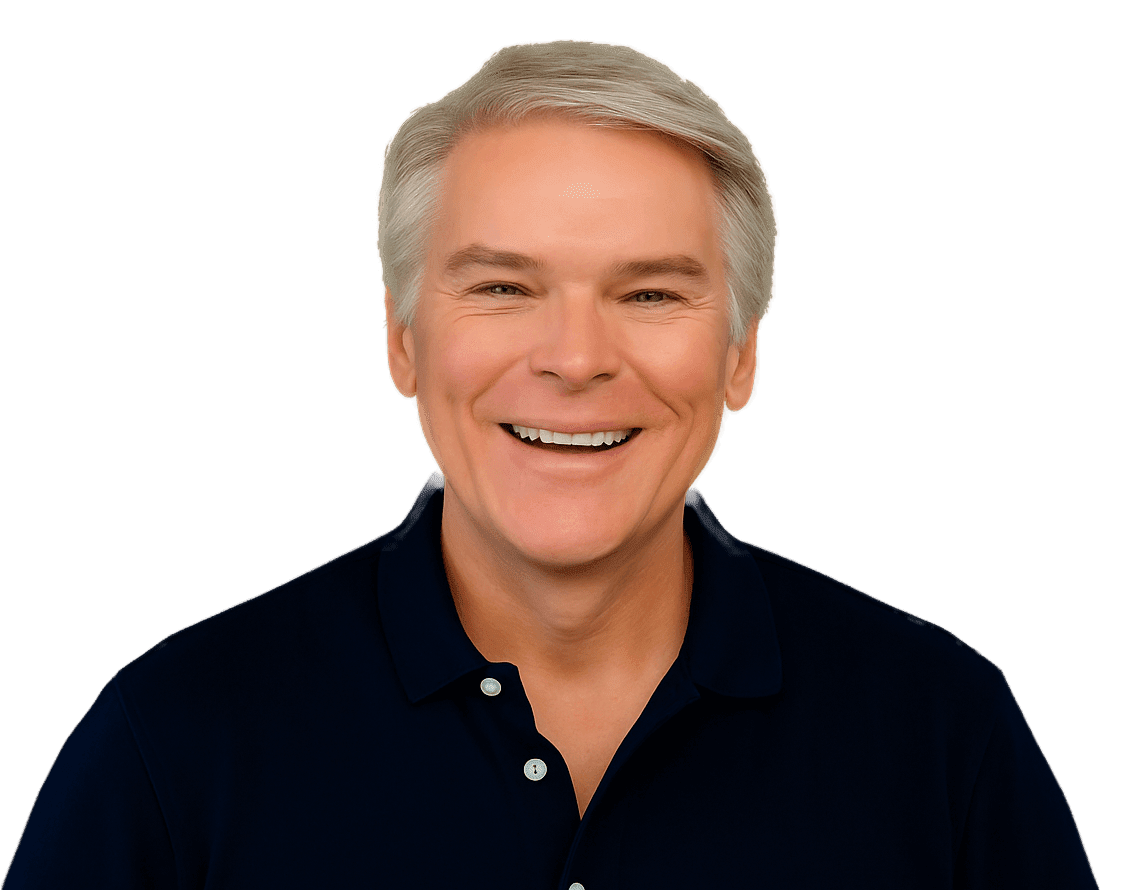
Seb Frey is a REALTOR® and founder of Team Sixty Plus, a curated network connecting older adults and their families with trusted professionals across California. With decades of experience helping homeowners 60+ navigate major life transitions—like downsizing, aging in place, or passing on a legacy—Seb brings deep market knowledge, a compassionate approach, and a commitment to simplifying complex decisions. When he’s not advising clients, he’s sharing expert insights on real estate, retirement strategies, and quality-of-life resources for the 60+ community.
In a world increasingly obsessed with longevity, few books cut through the noise with clarity, depth, and practicality like Outlive: The Science and Art of Longevity by Dr. Peter Attia. Co-written with journalist Bill Gifford, this book is not just a roadmap for living longer—it’s a masterclass in how to live better. With a blend of cutting-edge science, personal insight, and clinical experience, Outlive reframes how we think about aging, disease, and the kind of health that truly matters: the quality of life, not just its duration.
Dr. Attia, a Stanford- and Johns Hopkins-trained physician with a background in surgical oncology and performance medicine, brings an analytical mind and a compassionate heart to the subject of human longevity. Rather than focusing purely on how to extend life at all costs, Attia urges readers to optimize their “healthspan” — the number of years we live in good health, free of chronic disease or disability. According to Attia, it’s not enough to simply add years to your life; the goal is to add life to your years.
The Four Horsemen of Chronic Disease
At the core of Outlive lies the concept of the “Four Horsemen” — the four chronic diseases most likely to rob us of our health and independence as we age: heart disease, cancer, neurodegenerative diseases (like Alzheimer’s), and type 2 diabetes (and related metabolic dysfunction).
These are not sudden killers. Rather, they are slow, insidious conditions that develop over years or even decades. What makes them so dangerous, Attia explains, is that by the time symptoms emerge, significant damage has already been done. The traditional medical system, which he dubs “Medicine 2.0,” is reactive: it waits for disease to appear before responding. But longevity, as Attia envisions it, demands a new approach.
Enter Medicine 3.0
Medicine 3.0, as Attia calls it, is a proactive, personalized, and prevention-focused model. It doesn’t just aim to treat disease; it aims to delay or avoid it altogether. That means understanding individual risk factors, screening early, and adopting tailored strategies for diet, exercise, sleep, and emotional health.
This shift requires more than routine checkups and standard lab panels. It calls for a much deeper look into biomarkers, body composition, insulin sensitivity, aerobic capacity, and even mental resilience. In Outlive, Attia offers both the reasoning and the tools needed to build a personal longevity plan.
Medicare Made Simple
Medicare can be complicated – so let us break it down for you! Get our quick and easy guide, Medicare Made Simple!
Get the Guide!The Pillars of Longevity
Attia organizes his framework around four pillars: exercise, nutrition, sleep, and emotional health. Each pillar supports not only our physical health but also our ability to remain functionally independent well into our 80s and 90s.
Exercise is perhaps the most important of the four, and Attia devotes significant attention to it. He argues that physical capacity is the most important driver of healthspan. Specifically, he emphasizes strength training, cardiovascular fitness, and stability work. Attia introduces the concept of the “Centenarian Decathlon”—a set of physical tasks you want to be able to perform in your later years (e.g., carrying groceries, getting off the floor, walking long distances). Training for these tasks now builds resilience that pays off later.
Nutrition is another major focus, but Attia resists dogma. He doesn’t advocate for one-size-fits-all diets, but instead emphasizes principles: minimize ultra-processed foods, stabilize blood sugar, prioritize protein for muscle maintenance, and consider time-restricted eating or modest caloric restriction if appropriate. The goal isn’t to diet, per se, but to fuel your body for performance and longevity.
Sleep is often overlooked in conversations about health, but not in Outlive. Attia treats sleep as a foundational aspect of wellbeing. He encourages tracking sleep quality, eliminating stimulants and blue light before bed, and setting up routines that support deep, restorative sleep. Poor sleep, he argues, undermines every other intervention.
Emotional health rounds out the framework, and here Attia is especially candid. He opens up about his own struggles with perfectionism, fear of failure, and the emotional toll of high performance. Mental health isn’t just a soft add-on; it’s a central pillar of longevity. Social connection, purpose, and stress management are not just nice to have—they are essential.
Top 5 Things You Can Do Today to Improve Healthspan and Lifespan
Attia doesn’t just preach from the ivory tower. Outlive is packed with actionable advice. Here are five of the most important steps he recommends readers begin implementing today:
- Design Your Centenarian Decathlon: Think about what physical tasks you want to be able to do at 100, and start training for them now. Whether it’s climbing stairs, lifting grandchildren, or walking a mile, these goals shape your fitness strategy and give you a clear roadmap.
- Prioritize Resistance and Stability Training: Strength is the currency of aging well. Incorporate weight training, balance exercises, and flexibility work into your weekly routine. This not only supports mobility but also reduces the risk of falls and fractures later in life.
- Clean Up Your Diet: You don’t need to go keto or vegan unless those approaches work for you. What matters is avoiding processed foods, minimizing sugar, eating plenty of fiber and healthy fats, and consuming enough protein to maintain muscle mass as you age.
- Track and Improve Your Sleep: Invest in a sleep tracker or use an app to understand your sleep patterns. Aim for 7-9 hours of quality sleep per night. Create a sleep-friendly environment, avoid screens before bed, and be consistent with your sleep-wake times.
- Be Proactive About Prevention: Don’t wait until you’re sick to take action. Get regular bloodwork, monitor your glucose levels, check your VO2 max and bone density, and speak with your doctor about preventive screenings tailored to your personal risk factors.
Family Guide for Aging in Place
For Families with Older Adults who are looking to help with a Parent with Aging in Place!
Get the GuideA Personal and Practical Philosophy
What sets Outlive apart from other wellness books is Attia’s honesty. He doesn’t claim to have all the answers, and he’s quick to point out the limitations of existing research. In fact, he openly discusses his own mistakes, including years spent obsessing over biomarkers without considering mental health or relationships. This vulnerability makes the book not only informative but also deeply human.
Moreover, Attia doesn’t suggest that longevity is purely a matter of personal willpower. He acknowledges the role of genetics, socioeconomic factors, and access to healthcare. But he also argues that most people can significantly improve their trajectory through consistent, intentional behavior.
Outlive is not just for biohackers or elite athletes. It’s for anyone who wants to show up for their loved ones, enjoy an active life in older age, and reduce the risk of chronic disease. It’s a book about agency—about taking responsibility for your future health by making smarter decisions today.
Final Thoughts
Outlive is a landmark book in the field of preventive health. It synthesizes complex medical science into a practical, readable format without dumbing it down. For those serious about longevity, it offers both a philosophical foundation and a concrete action plan. Whether you’re 35 or 75, there’s something in Outlive that can change your trajectory.
Dr. Peter Attia doesn’t promise immortality. What he offers instead is far more valuable: a toolkit for living better, longer, and with purpose. If you want to be one of the rare individuals thriving in their 80s, 90s, or beyond, Outlive should be on your nightstand.