

Seb Frey is a REALTOR® and founder of Team Sixty Plus, a curated network connecting older adults and their families with trusted professionals across California. With decades of experience helping homeowners 60+ navigate major life transitions—like downsizing, aging in place, or passing on a legacy—Seb brings deep market knowledge, a compassionate approach, and a commitment to simplifying complex decisions. When he’s not advising clients, he’s sharing expert insights on real estate, retirement strategies, and quality-of-life resources for the 60+ community.
Downsizing and decluttering are two words that can strike both relief and fear into the hearts of anyone over sixty. Relief because the thought of shedding decades of accumulated “stuff” feels liberating. Fear because every object seems to hold a memory, and letting go of the object can feel like letting go of the memory itself.
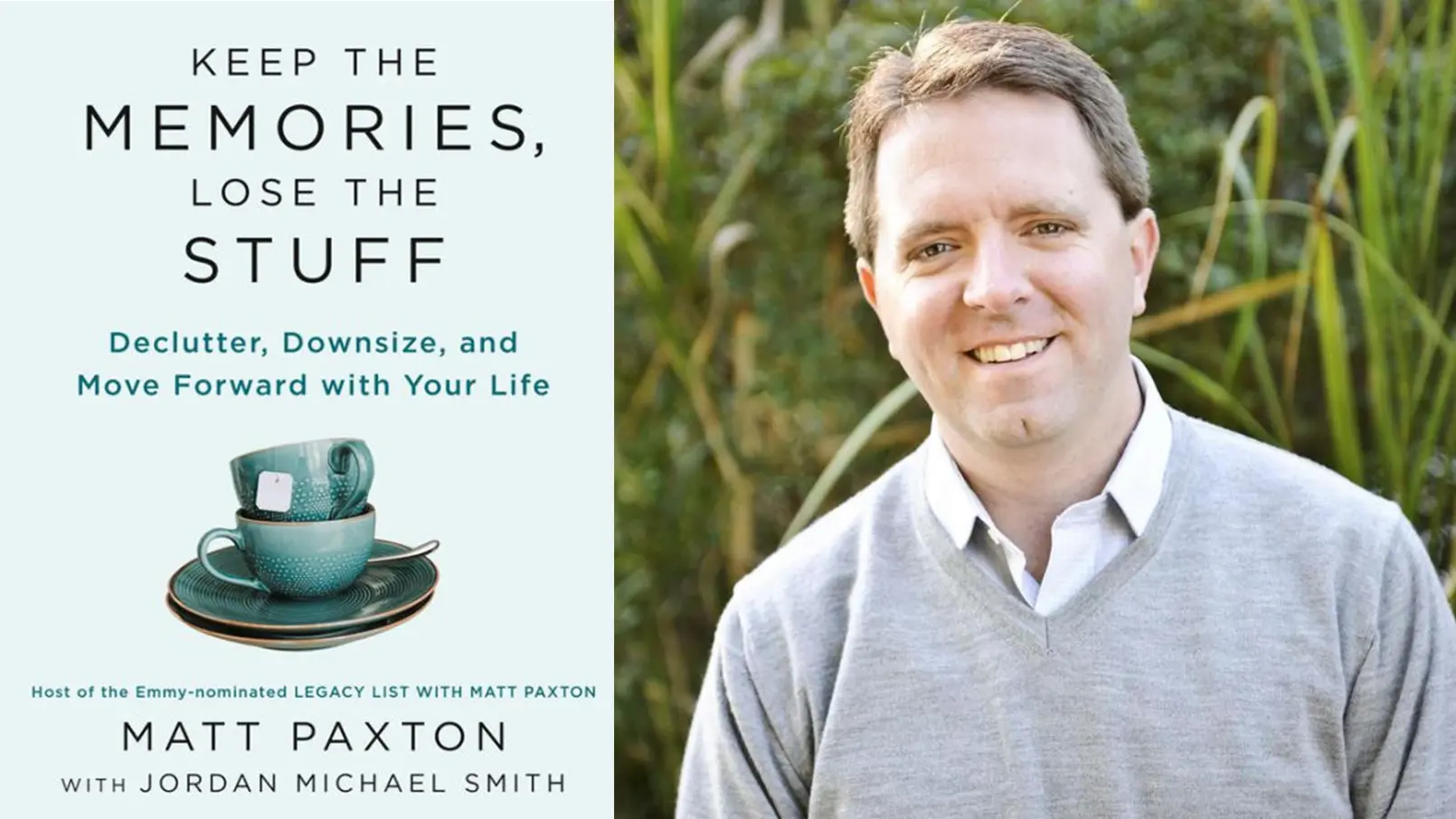
That’s where Matt Paxton’s book, Keep the Memories, Lose the Stuff: Declutter, Downsize, and Move Forward with Your Life, comes in. Written with Jordan Michael Smith and developed in partnership with AARP, this book isn’t just another organizing manual. It’s a compassionate, story-driven guide that blends psychology, practicality, and real-world advice for people facing one of life’s biggest transitions: letting go.
Why Downsizing Is Different After 60
You don’t have to be a “hoarder” to feel overwhelmed by stuff. If you’ve lived in the same home for decades—as many Silicon Valley and Bay Area homeowners have—you’ve accumulated far more than you realize. Closets packed with clothing, garages stacked with tools, cabinets overflowing with dishes, shelves lined with books. Each thing has a story, a moment in time, a connection to the people we love.
For younger adults, decluttering often means tossing what’s out of style or donating what no longer fits. For older adults, downsizing is layered with emotion:
- The rocking chair that once held your children.
- The box of holiday ornaments handmade by your parents.
- The dishes used for every family gathering.
Paxton understands this difference. He makes it clear from the start: decluttering later in life isn’t about stripping away meaning—it’s about honoring memories while creating the freedom to move forward.
The Author Behind the Advice
Matt Paxton is well known to television audiences. He’s one of the original organizers from A&E’s Hoarders and now hosts Legacy List with Matt Paxton on PBS. For nearly two decades he’s worked in some of the most emotionally challenging environments imaginable—homes where belongings have taken over every surface, every corner, and sometimes even every relationship.
That experience makes Paxton uniquely equipped to speak with both compassion and practicality. He’s seen how difficult it is for families to part with possessions, and he’s developed a process that respects the person, not just the pile.

Time to Downsize?
Discover the joy of letting go! Our guide to Downsizing helps you downsize with ease.
The Nine-Step Process for Decluttering and Downsizing
The heart of Keep the Memories, Lose the Stuff is Paxton’s nine-step process. This isn’t a “magic wand” system. It’s a flexible framework you can adapt to your situation. Here’s how it breaks down:
1. Start Small
Choose one drawer, one shelf, or one corner. By starting with something manageable, you build momentum without feeling defeated.
2. Sort with Purpose
Use consistent categories: keep, donate, sell, discard. Consistency reduces decision fatigue and helps you see progress.
3. Honor the Memories
Before letting something go, find a way to capture the memory. Photograph it, write down the story, or pass it to someone who will cherish it.
4. Bring in Support
Don’t go it alone. Invite family, friends, or even professional organizers to lend perspective and encouragement.
5. Prioritize Safety
Excess clutter isn’t just inconvenient—it’s dangerous. Loose rugs, stacked boxes, and blocked hallways are fall hazards, especially as we age.
6. Focus on Usefulness
Ask yourself: does this item serve me today? If not, does it deserve the space it takes up?
7. Set Limits
Boundaries help. One box of keepsakes per child. One shelf of holiday decorations. One drawer for old letters.
8. Celebrate Progress
Decluttering can feel endless, but every bag out the door and every clear surface deserves recognition.
9. Move Forward
The ultimate goal is not just a cleaner house—it’s a lighter life. Downsizing opens the door to new experiences, less stress, and greater freedom.
The Emotional Side of Decluttering
What makes this book stand out is its acknowledgment of the emotional weight of decluttering. Paxton doesn’t gloss over the guilt, grief, or anxiety that comes with letting go. Instead, he validates those feelings and provides tools to work through them.
He reframes downsizing as an act of love: for yourself, for your children, and for your future. By deciding what matters now, you spare your loved ones the burden of sorting through everything later. You also ensure that your legacy is preserved intentionally, not accidentally.
Stories That Hit Home
Paxton weaves in stories from real families he’s worked with—couples preparing for retirement, adult children managing estates, and individuals trying to reclaim space in their homes. These stories aren’t sensationalized. They’re honest and relatable, showing both the struggle and the triumph.
For readers in the Bay Area, where many homes are filled with decades of tech gadgets, collectibles, and cultural artifacts from diverse backgrounds, these stories resonate deeply. They remind us that while the objects differ, the emotions are universal.
Practical Tips for Everyday Decluttering
In addition to the nine-step framework, Paxton sprinkles in dozens of small, actionable tips:
- Take photos of sentimental items. A digital album takes up no space but keeps the memory alive.
- Digitize documents and photos. Free yourself from boxes of paper while preserving the information forever.
- Create a “legacy list.” Choose a few items that truly define your story and pass them on intentionally.
- Use short sessions. Set a timer for 15 minutes. Declutter until it goes off. Small steps add up.
- Accept imperfection. Your home doesn’t have to look like a magazine spread. Progress matters more than perfection.
These tips make the process feel doable. They also remind readers that decluttering isn’t a single event—it’s an ongoing practice.
Tap Into your Home Equity
Need to raise some cash to pay for home improvements, or anything else? Get our Guide on Creative Ways to Tap Into Home Equity
Get our Guide!Downsizing in the Bay Area: A Special Challenge
Here in Santa Clara County, downsizing has an added layer. Homes purchased for $80,000 in the 1970s may now be worth $2 million or more. That equity represents both opportunity and responsibility.
For older homeowners, downsizing often means balancing three things:
- Maximizing the value of the home sale.
- Preparing the property for market (which often involves decluttering and repairs).
- Making emotional decisions about what to take, what to give away, and what to release.
Paxton’s advice dovetails beautifully with this reality. By guiding homeowners to focus on what matters most, the book makes the real estate process smoother, less stressful, and ultimately more rewarding.
Downsizing as an Act of Love
One of the most powerful takeaways from the book is this: downsizing is not just about you. It’s a gift to your loved ones.
Imagine your children walking into your home after you’re gone and finding everything clearly organized, stories captured, and treasures already identified. Contrast that with the overwhelm of a garage packed to the ceiling, closets filled with boxes, and decades of belongings with no context.
Decluttering now saves your family later. It turns downsizing into an act of care.
Who Should Read Keep the Memories, Lose the Stuff?
This book is perfect for:
- Older adults considering a move to a smaller home or retirement community.
- Families helping parents or grandparents sort through decades of belongings.
- Anyone feeling stuck or overwhelmed by clutter.
- Homeowners in the Bay Area preparing to sell and wanting to maximize value while minimizing stress.
It’s also a great read for adult children who want to understand their parents’ hesitation and approach those conversations with empathy.
Final Thoughts: A Decluttering Book With Heart
There are many books about organizing and minimalism, but few address the real heart of downsizing after sixty. Keep the Memories, Lose the Stuff is different. It’s warm, empathetic, and practical. It doesn’t shame you for having too much, and it doesn’t push you to toss everything. Instead, it gives you the tools to honor your past while embracing your future.
If you’ve been putting off decluttering because it feels overwhelming—or if you know a move is on the horizon—this book is worth your time. It’s not just about losing stuff. It’s about gaining freedom.