

Seb Frey is a REALTOR® and founder of Team Sixty Plus, a curated network connecting older adults and their families with trusted professionals across California. With decades of experience helping homeowners 60+ navigate major life transitions—like downsizing, aging in place, or passing on a legacy—Seb brings deep market knowledge, a compassionate approach, and a commitment to simplifying complex decisions. When he’s not advising clients, he’s sharing expert insights on real estate, retirement strategies, and quality-of-life resources for the 60+ community.
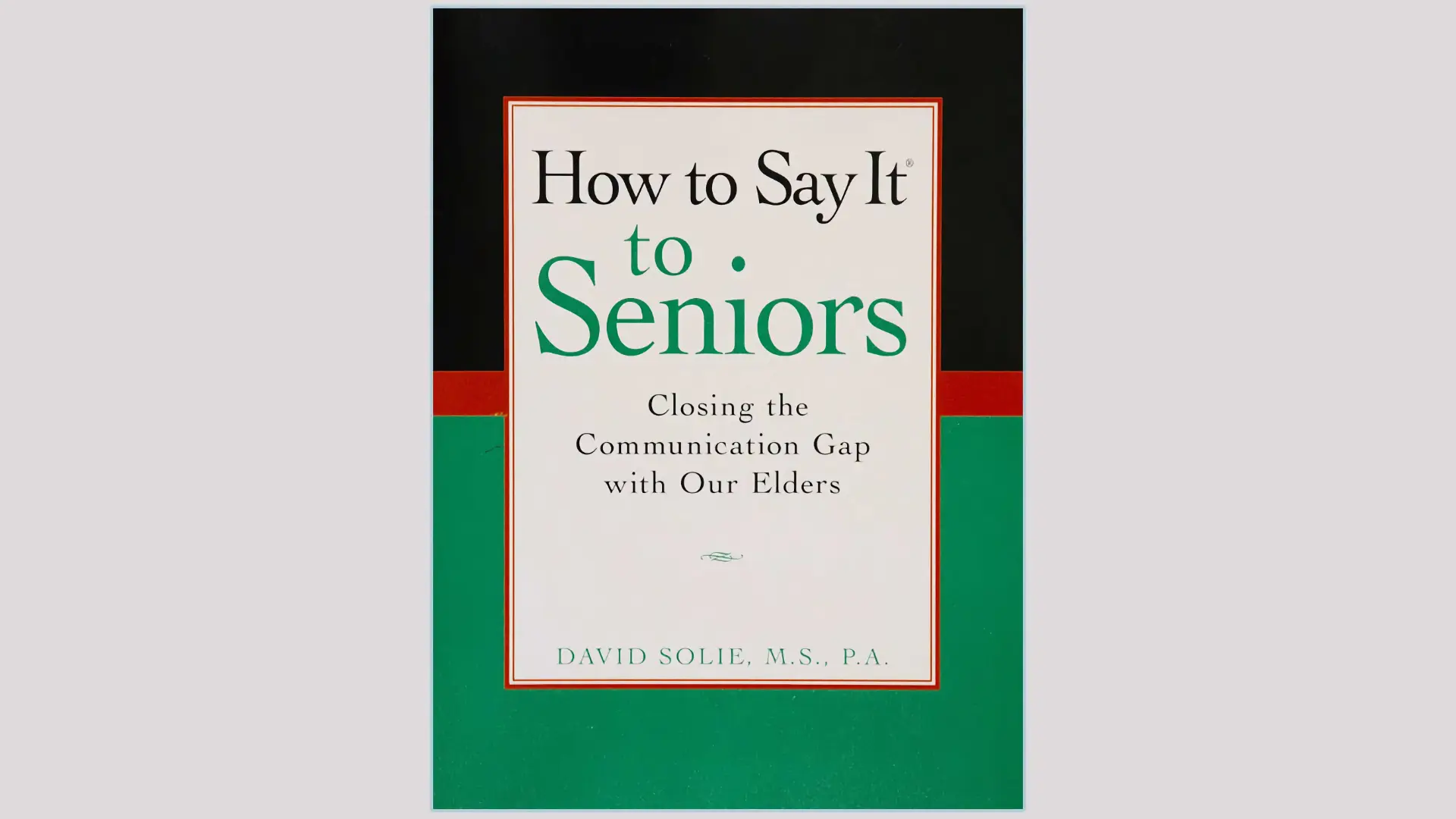
If you’ve ever tried to have a serious talk with an aging parent and found yourself walking away frustrated, you’re not alone. Whether the topic was downsizing, driving, healthcare, or just a difference in priorities, it can feel as if you and your loved one are speaking entirely different languages. That’s exactly the communication barrier How to Say It to Seniors: Closing the Communication Gap with Our Elders sets out to help us overcome.
Written by David Solie, a gerontologist and communication expert, this book remains one of the most compassionate, clear-eyed guides available on the subject. Even though it was published nearly two decades ago, it still feels remarkably relevant in today’s aging-forward society—especially here in Silicon Valley, where many long-time homeowners in their 60s, 70s, and 80s are navigating life changes and family dynamics in real time.
Why This Book Still Matters
At its core, How to Say It to Seniors isn’t about talking to older adults—it’s about learning how to talk with them. Solie’s insight comes from years of observing family relationships, professional caregiving interactions, and the subtle shifts that happen when people enter the later chapters of life. He invites us to see older adults not as people “slowing down,” but as individuals entering a distinct developmental stage, one focused on two powerful themes: maintaining control and leaving a legacy.
This idea alone is transformative. It explains why a conversation that seems straightforward to an adult child—like suggesting a move to a smaller home—can feel like a threat to autonomy for the parent. It’s not just about the house. It’s about control, independence, and the story of a life well-lived. Once you understand that, your approach naturally changes. You stop trying to “convince” and start trying to collaborate.
Family Guide for Aging in Place
For Families with Older Adults who are looking to help with a Parent with Aging in Place!
Get the GuideWhat the Book Offers
Solie organizes the book around understanding this later-life “agenda,” and then gives readers practical ways to adapt their communication style. Rather than offering vague advice about “being patient,” he digs into the psychology of aging and gives real examples of how to reframe conversations that typically go sideways.
He shows how directives—“You need to do this,” “You have to stop that”—almost always backfire, while choices and invitations open the door to cooperation. For instance, saying, “Would you feel more comfortable with this option or that one?” acknowledges agency. It turns a confrontation into a partnership. The tone shifts from authority to respect, and suddenly both sides feel heard.
The book also addresses one of the most underestimated dynamics in family relationships: the life review. Older adults often revisit old stories, regrets, or triumphs, not because they’re forgetful, but because they’re integrating their experiences and searching for meaning. Instead of cutting these moments short or redirecting the topic, Solie suggests letting them unfold. He encourages active listening and genuine curiosity—because what’s happening isn’t repetition, it’s reflection.
For professionals—like Realtors, attorneys, or care coordinators who work with older adults—Solie’s framework is equally valuable. It reminds us that behind every “client” is a person balancing competing priorities: safety versus independence, control versus change, privacy versus connection. The language we use can either build trust or shut it down.
Why It Resonates with the Team Sixty Plus Audience
At Team Sixty Plus, we often talk about aging with intention and dignity—two values that align perfectly with Solie’s philosophy. Our readers are people over 60, or professionals who serve them. Many are navigating the realities of aging parents, financial transitions, and emotional shifts that come with later life. This book fits right into that conversation.
What’s refreshing about Solie’s approach is how non-clinical it feels. It’s not academic or overly psychological. It’s empathetic, down-to-earth, and written in plain English. He doesn’t preach or condescend. Instead, he teaches us to pause, listen, and appreciate the perspective of those we love. And he gives us the words to match that mindset.
There’s a beautiful section where he reminds readers that “helping” doesn’t always mean fixing. Sometimes, helping means waiting. Sometimes it means letting the other person steer, even if you’re afraid of where the road leads. That idea—of stepping back with grace rather than pushing forward with force—is deeply liberating, and it’s one that resonates with anyone who has tried to care for an independent parent.

Time to Downsize?
Discover the joy of letting go! Our guide to Downsizing helps you downsize with ease.
Where It Falls Short
If there’s one area where the book shows its age, it’s in its examples. Some of the anecdotes feel dated, and it doesn’t address modern concerns like digital communication, social media, or technology use among seniors. Readers looking for guidance in communicating with loved ones who have cognitive impairment or dementia may also find the strategies limited. Solie assumes a certain level of self-awareness and mental clarity in his subjects, which may not apply in every case.
Still, those gaps don’t diminish the heart of the book. The emotional intelligence behind Solie’s message feels timeless. And the situations he describes—like grown children struggling to persuade an aging parent to stop driving, or a mother refusing to leave her longtime home—could have been written yesterday.
Lessons You Can Use Right Away
What sets How to Say It to Seniors apart is its practicality. You can read a single chapter and immediately apply it to your next difficult conversation. It’s a bit like emotional aikido—you learn to redirect energy rather than resist it.
Instead of pushing back when an older loved one says “no,” you pause, acknowledge their reasoning, and gently reopen the discussion later. Instead of arguing about facts, you focus on feelings. And rather than demanding immediate decisions, you create small, dignified choices that allow your parent or partner to maintain control.
The shift sounds subtle, but it’s huge. For families caught in cycles of tension, these tools can rebuild trust and calm the storm.
A Word About Tone
Solie’s writing style is one of the book’s biggest strengths. It’s clear, warm, and conversational. He doesn’t talk at the reader—he talks with you. That makes his advice easy to absorb, even in emotionally charged topics. He balances compassion with realism, reminding readers that progress is slow and communication is a skill, not a quick fix.
For professionals who interact with older adults regularly—especially those in senior living, healthcare, or real estate—his tone also models the kind of patience and empathy that defines good service.
The Bottom Line
How to Say It to Seniors isn’t a “how-to” manual so much as a mindset shift. It teaches us to slow down, reframe our goals, and listen with humility. If you’ve ever felt like your conversations with an aging loved one were going nowhere, this book will help you understand why—and show you what to do differently.
The lessons here are just as valuable for seniors themselves as for their children or caregivers. Understanding the psychological underpinnings of aging gives us all more grace and empathy—not just for others, but for ourselves.
At Team Sixty Plus, we often say that successful aging isn’t about resisting change—it’s about finding harmony with it. David Solie’s book is a thoughtful companion on that journey. It’s a reminder that language can heal or divide, that listening is as powerful as speaking, and that connection is still possible across the generational divide.
I’d give How to Say It to Seniors a strong 4.5 out of 5. It’s wise without being preachy, practical without being prescriptive, and deeply human at its core. If you work with, care for, or love someone over 70—or if you’re navigating your own later-life transitions—this is a book worth reading, discussing, and keeping close.

Everyone Needs a Little Help Sometimes
There’s so much to know when it comes to lifestyle choices for Older Adults, it’s hard to know even where to begin. One way is to simply click on the button below and let one of our coaches give some guidance – at no cost to you.
Get Help Now