

Seb Frey is a REALTOR® and founder of Team Sixty Plus, a curated network connecting older adults and their families with trusted professionals across California. With decades of experience helping homeowners 60+ navigate major life transitions—like downsizing, aging in place, or passing on a legacy—Seb brings deep market knowledge, a compassionate approach, and a commitment to simplifying complex decisions. When he’s not advising clients, he’s sharing expert insights on real estate, retirement strategies, and quality-of-life resources for the 60+ community.
Every week, I sit at kitchen tables with long-time homeowners who tell me some version of the same story:
“We want to downsize… but we’re stuck. There’s just too much stuff.”
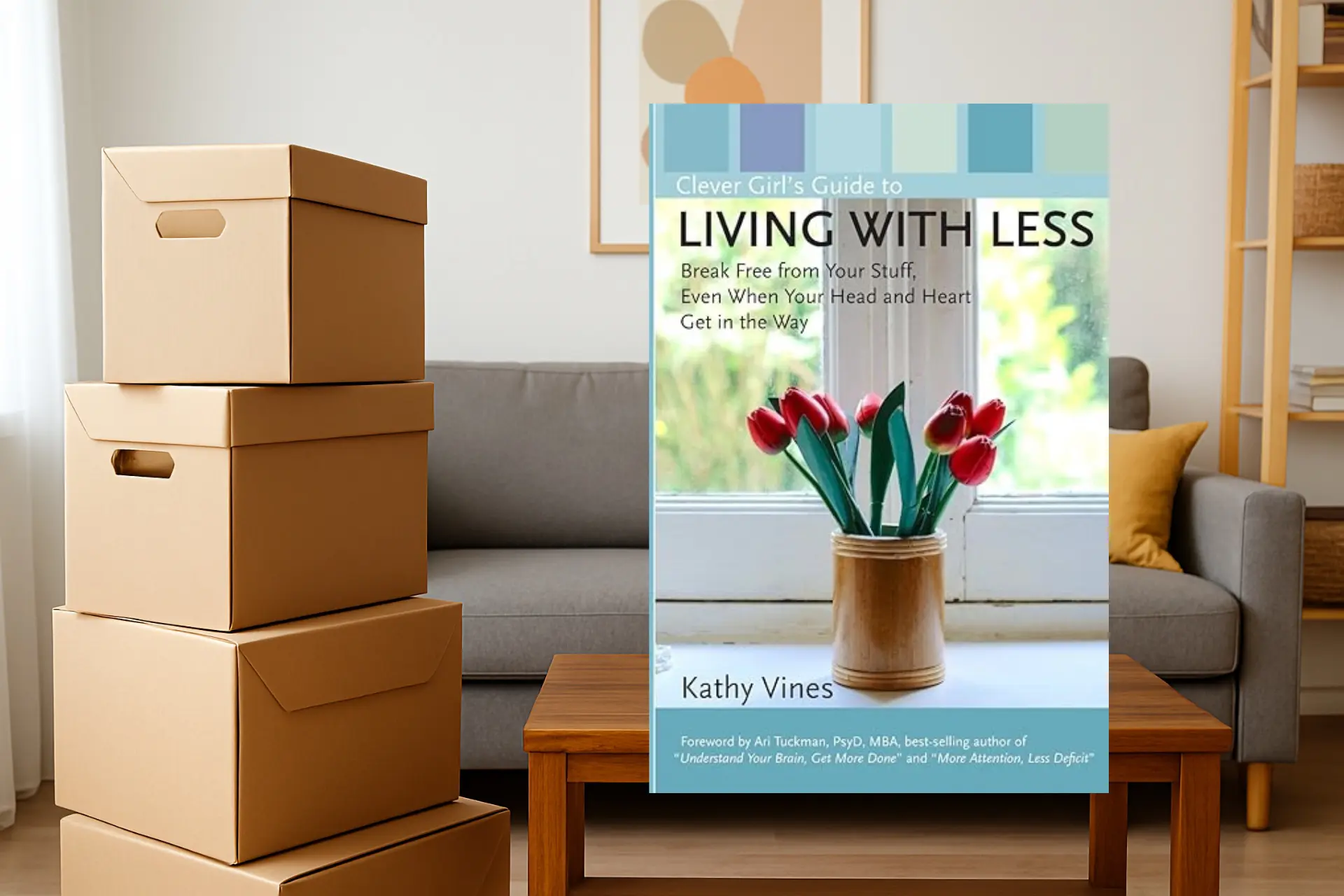
If that sounds familiar, Clever Girl’s Guide to Living with Less: Break Free from Your Stuff, Even When Your Head and Heart Get in the Way by professional organizer Kathy Vines is exactly the kind of book I want in your hands. Published in 2017, it’s written for people who already know they have too much, already feel overwhelmed by clutter, and can’t understand why they just can’t seem to let things go.
As a Seasoned Living Strategist, a lot of my work is helping people 55+ in the Bay Area make major housing decisions: downsizing, aging in place, moving closer to family, or simplifying life in a way that lines up with their next chapter. The real obstacle usually isn’t the real estate. It’s the stuff — and the emotions attached to it.
This book leans right into that emotional tangle. It’s not just about cute storage hacks or labeled bins. It’s about why you’re struggling and how to move through it in a practical, compassionate way.
In this article, I’ll walk through:
- What the book is really about
- The emotional roadblocks it helps you uncover
- How its strategies line up with downsizing, moving, and aging in place
- The specific ways I’d use this book with my own clients in California
And yes, I’ll give you my honest take on who this book is best for — and who might want something more advanced.
What Clever Girl’s Guide to Living with Less Is Really About
On the surface, Clever Girl’s Guide to Living with Less is a decluttering and organizing book. But Vines is less concerned with how to fold your T-shirts and much more concerned with what’s going on in your head and heart when you try to let something go.
The core premise is simple:
- You’re overwhelmed by your stuff.
- You sincerely want less of it.
- But every time you start to declutter, something inside you resists.
- That “something” is not laziness or failure — it’s a set of very normal, very human stories your brain tells to keep everything “just in case.”
So instead of shaming you for not being more organized, Vines spends a lot of time explaining:
- Why it’s hard to let go, even when you know you should
- The emotional “scripts” that pop up when you pick up an object
- How to notice those scripts and gently challenge them
- How to make practical decisions without drowning in guilt or anxiety
She also walks through some of the toughest categories of stuff — the ones people shove in closets, attics, garages, and storage units for years — and offers step-by-step ways to tackle them without losing your mind in the process.
It’s written in a friendly, conversational voice, with plenty of real-world examples. It feels less like a lecture and more like sitting with a very organized, nonjudgmental friend who’s seen it all and still believes you can get through this.

Time to Downsize?
Discover the joy of letting go! Our guide to Downsizing helps you downsize with ease.
Why Letting Go Is So Hard: The “Head and Heart” Problem
If you’ve ever stood in front of a closet or a garage and thought, “What is wrong with me? Why can’t I just get rid of this stuff?” — this is where the book really shines.
Vines digs into the psychology of clutter, explaining that most of us get stuck for a predictable set of reasons. She outlines common emotional and mental roadblocks that show up when we try to edit our belongings — things like:
- Guilt: “My mom gave this to me.” “I spent good money on this.” “It feels wasteful to throw it out.”
- Fear & scarcity: “What if I need this someday?” “What if I can’t afford to replace it?”
- Identity and self-image: “If I give this up, does that mean I’m not that person anymore?” “I used to be the kind of person who… (ran marathons, hosted big dinners, did all the crafts).”
- Obligation: “My kids might want this someday.” “I should save this for someone.”
- Perfectionism and overwhelm: “If I can’t do it perfectly, I’d rather not start.” “This is such a big project — I’ll get to it later.”
Her point is that clutter is rarely just about stuff. It’s about stories. The object in your hand might be a pair of shoes — but in your head, it’s tangled up with who you were, who you wanted to be, or who you think you “should” be.
From my perspective as someone who helps people prepare their homes for sale, this is absolutely true. I’ve seen people freeze over a single box of old paperwork or family photos, not because the box is physically heavy, but because the decisions inside it are emotionally heavy.
What I appreciate about Vines’ approach is that she normalizes all of this. You’re not broken. You don’t lack willpower. You’re just dealing with emotional wiring that makes decluttering hard — and once you see it clearly, you can start to work with it instead of fighting it.
The Toughest Categories of Stuff — and How the Book Helps
The book doesn’t just talk about emotions in the abstract. It zooms in on some of the most challenging types of possessions, the ones that tend to clog up closets, garages, basements, and storage units for years. According to the descriptions and reviews, Vines walks readers through how to apply her framework to tricky categories many of us struggle with.
Based on the way the book is presented, here are the kinds of categories she’s focused on:
- Sentimental items: Old letters, photos, kids’ artwork, inherited pieces — all the things that carry emotional weight.
- “Perfectly good” stuff: Items that still work, still fit, or still have value… but not necessarily for you.
- Aspirational items: Craft supplies, hobby gear, exercise equipment, or anything that represents the life you hoped to live but maybe don’t anymore.
- Gifts and inherited things: Stuff you’re keeping out of obligation, not love.
- Paper and “important” documents: The piles, files, and boxes you’re afraid to toss because “what if I need it?”
Each of these categories tends to trigger very specific emotional scripts, and that’s what Vines helps you recognize and untangle.
Instead of telling you, “Just get rid of half your stuff,” she:
- Helps you notice what you’re feeling
- Gives language to the story your brain is telling
- Offers questions to ask yourself so you can make a decision on purpose
- Encourages you to define what “enough” looks like for your life right now
For my downsizing and aging-in-place clients, these are usually the exact categories we get stuck on. Furniture? Easy. Old tax records? Not too bad. Boxes of kids’ school projects? Your parents’ costume jewelry? The china you never use? That’s where the wheels tend to come off.
This is where I see the book as a tool, not just a read. If you’re staring down a big move or a major declutter, you can go category by category alongside Vines and use her framework to keep you moving.

Everyone Needs a Little Help Sometimes
There’s so much to know when it comes to lifestyle choices for Older Adults, it’s hard to know even where to begin. One way is to simply click on the button below and let one of our coaches give some guidance – at no cost to you.
Get Help NowHow This Book Connects to Downsizing, Moving, and Aging in Place
On the surface, Clever Girl’s Guide to Living with Less looks like a general decluttering book. But if you’re a seasoned homeowner — especially someone in the Bay Area thinking about downsizing, simplifying, or staying safely in your home as long as possible — the themes line up almost perfectly with what you’re facing.
Here’s how I see it connecting:
1. It respects the emotional weight of a lifetime of stuff
If you’ve been in your home for 20, 30, or 40+ years, your belongings aren’t just “inventory.” They’re your life in physical form. Vines approaches this with empathy rather than judgment, which is exactly what most people need at this stage.
2. It gives you language for what’s really going on
When you can say, “I’m not keeping this because I love it, I’m keeping it because I feel guilty,” the decision becomes clearer. That kind of clarity is incredibly helpful when you’re trying to get a home ready to sell or create a safer, more manageable living environment.
3. It helps separate your life from your stuff
One thing I talk about a lot with clients is this: Your memories don’t live in your possessions. Your possessions can remind you of memories, but you don’t lose your life story if you let go of an object. Vines’ work reinforces that message and helps people internalize it.
4. It supports practical, step-by-step action
From what we can see in the descriptions and reviews, the book is not just philosophy. It offers strategies, questions, and structures you can actually use to work through decisions.
For someone facing a big move — especially under time pressure — that combination of emotional insight and practical action is gold.
My Biggest Takeaways as a Seasoned Living Strategist
Reading Clever Girl’s Guide to Living with Less through the lens of someone who helps people make housing transitions, a few big takeaways stand out.
1. You’re not alone, and you’re not “bad at this”
The book seems designed to normalize your experience. If you’ve been quietly beating yourself up for years because you “should” be more organized or “should” have dealt with the garage by now, consider this permission to stop. You’re dealing with exactly the same head-and-heart tug-of-war as millions of other people.
2. Insight first, strategy second
One of the strengths of this book is that it doesn’t skip ahead to tactics. It spends real time on why you’re stuck, and only then moves into how to get unstuck. That’s the same sequence I use when I work with downsizers: understand the emotional landscape first, then develop a realistic, step-by-step plan.
3. Small, consistent decisions beat giant heroic ones
Decluttering and downsizing don’t have to be a dramatic, one-weekend marathon. In fact, for most people, that kind of all-at-once approach backfires. The spirit of this book fits better with a sustainable, bite-sized strategy: one drawer, one shelf, one box at a time — guided by better questions and clearer criteria.
4. “Living with less” is really about living with
what supports you now
For my clients, I don’t talk about minimalism as a moral virtue. I talk about alignment. Does your home — and the stuff in it — support the life you’re living today and the life you want in the next 5–10 years?
Vines’ idea of “living with less” appears to be in that same lane. It’s not about stripping your life bare. It’s about freeing yourself from things that weigh you down so you can move more freely into whatever is next.
Retirement Planning for Older Adults
Are you a little late to the retirement planning game? Get this comprehensive guide and get caught up!
Get the Guide!Who This Book Is Best For (and Who Might Want More)
No book is perfect for everyone, so let me be candid about who I think will get the most value out of Clever Girl’s Guide to Living with Less.
Ideal readers
- Long-time homeowners who feel overwhelmed by stuff and need a compassionate starting point
- People 50+ who are thinking about downsizing, moving, or staying safely in their homes and want to lighten the load
- Anyone who has said, “I know I have too much, but I can’t seem to let things go”
- People who appreciate a friendly, conversational voice rather than a rigid checklist
Might want something more advanced
- Folks who are already hardcore minimalists or seasoned declutterers
- People looking for a highly detailed, room-by-room systems manual with advanced organizing techniques
- Readers who want a very design-focused, Pinterest-perfect approach
From the available reviews and commentary, the book is described as a good primer — a solid foundation, especially for people who are just starting to tackle years of accumulation or who feel emotionally blocked around clutter.
If you’re at the “I don’t even know where to start” stage, this is likely a great fit. If you’re already deep into the world of organizing books and podcasts, you may still find the emotional framing helpful, but you’ll probably pair it with more advanced strategy books or professional help.
How I’d Use This Book With My Clients
If you’re a homeowner in Silicon Valley or the surrounding areas and you’re thinking about downsizing, aging in place, or getting your home ready for sale, here’s how I’d weave Clever Girl’s Guide to Living with Less into the process.
1. As pre-work before we tackle the house
Before we start sorting closets, cabinets, garages, and attics, I might suggest you read this book — or even just a few chapters that speak directly to your biggest sticking points. That way, when we start making decisions, you already have a framework for what’s happening in your head.
2. As a “companion guide” for tricky categories
If we know you’re especially stuck on sentimental items, inherited things, or “perfectly good” stuff you feel guilty donating, we can use the book’s concepts as a shared language:
- “Is this a guilt item or a joy item?”
- “Are you keeping this because you love it — or because you’re afraid of what it means to let it go?”
That shared language makes everything smoother.
3. As support for family conversations
Downsizing and decluttering often involve other people: spouses, kids, siblings, even friends. A book like this can be a neutral way to start conversations about why certain things are hard to let go of and what “enough” looks like for the next phase of life.
4. As part of a bigger “Seasoned Living” plan
For many of my clients, decluttering is just one piece of a larger puzzle that includes:
- Safety and accessibility at home
- Financial planning and estate considerations
- Timing a home sale for the best outcome
- Exploring senior living or rightsized housing options
This book can slot into that bigger picture as the emotional and practical foundation for dealing with your belongings — which, in turn, frees you up to make better, clearer decisions about everything else.
Final Thoughts: Is Clever Girl’s Guide to Living with Less Worth Your Time?
In my view, yes — especially if you’re a long-time homeowner who’s feeling overwhelmed, stuck, and more than a little embarrassed by how hard it feels to let go of things.
Kathy Vines brings together three things I really value:
- Compassion — You never feel shamed or scolded.
- Clarity — She helps you understand what’s going on inside your head and heart.
- Practicality — She doesn’t leave you in the clouds; there are real steps you can take.
If you’re considering downsizing, preparing for a move, or simply trying to create a home that is easier to live in as you age, Clever Girl’s Guide to Living with Less can be a powerful ally. It won’t do the work for you — no book can — but it can absolutely make the work feel less mysterious, less overwhelming, and a lot more doable.
And if you’d like help turning the ideas in this book into an actual downsizing or aging-in-place plan — tailored to your home, your stuff, and your goals — that’s exactly the kind of strategy I love to build with people.
You Need a Winning Strategy
When it comes to navigating the ocean of resources for older adults, it helps – a lot – to have someone who can show you the way. Book a call with a coach to save time, money, and no small amount of frustration.
Click Here to Book a Call