
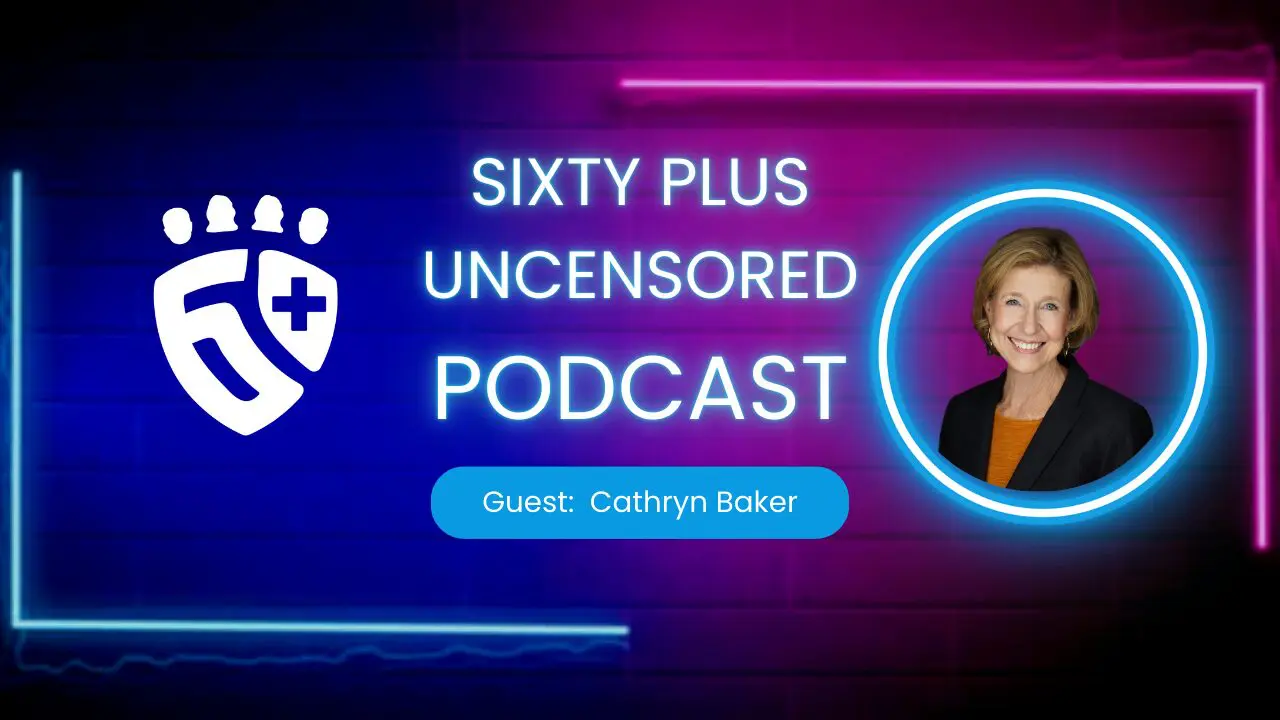
Cathryn Baker is the kind of woman who makes you rethink what “settling down” is supposed to look like. She spent nearly four decades building and selling two staffing companies, the kind of grind that shapes you. Then, at 67, when the work got too easy and her confidence started slipping in ways she didn’t expect, she made a defining pivot: she left the corporate comfort and bought a 1,136-acre ranch in the Texas Hill Country. Today she lives in rural, works as a certified executive coach and consultant, and has a mission that’s simple and stubborn in the best way: don’t fade out, don’t shrink, and don’t let age make you forget you still matter.
Early Career: Building Companies, Building a Life
Cathryn’s professional story starts with a big swing and a lot of responsibility. At 28, she formed her first staffing company while newly widowed, caring for an infant and a five-year-old. She built that first business with a partner and ran it for 15 years.
Staffing wasn’t a side hustle for her. It was the core of her working life: relationships, grit, hiring, sales, and the constant problem-solving that comes with a business where something can change at 4:45 p.m. and you still have to deliver by 5:00. Over time, the company grew to about $15 million in revenue, “small potatoes,” she jokes, compared to the biggest staffing firms, but not small potatoes for her. The point wasn’t ego. The point was that she built something real.
Eventually, she sold that company to her partner. And like a lot of builders, she didn’t pause for long before doing it again.
If you’re thinking through your own “second act” (or third) and want a clearer picture of what purpose can look like after a big career chapter, When Retirement Feels Too Small: How to Reclaim Purpose, Connection, and Joy is a great companion resource.
The Second Company and the “Stayed Too Long” Lesson
Cathryn’s second staffing company also grew. She ultimately sold it to a group she’d joined through an LLC structure, where each owner had their own piece, and then the group came together. After the sale, she stayed on for a couple of years because that was the agreement, and she did what she always does: she performed. She even opened another office and helped grow those offices to around $13 million.
But here’s where her story becomes especially relatable for anyone thinking about later-life transitions. After those initial contract years, she stayed an additional three years, not because she had to, but because leaving can be surprisingly hard, even when you’re successful.
She said it plainly: she was bored. And it took her a full year just to admit that word out loud.
When Work Gets Easy, Confidence Can Get Weird
We don’t talk about this enough: boredom isn’t always relaxing. Sometimes boredom messes with your identity, especially if your identity has been built around being the person who solves problems and drives outcomes.
Cathryn described that season as one where everything became easy. The work wasn’t challenging. Her house was paid for. She was appreciated and respected. It wasn’t toxic, and it wasn’t dramatic, so it was confusing that she felt so flat.
What changed wasn’t the company. What changed was her sense of purpose. She became a clock watcher, something she’d never been in her life. She’d always worked for herself, and now she was living for the weekend like a kid counting down school hours. The heaviness wasn’t loud; it was quiet. It was the slow drip of, “Is this it?”
Then came the part that startled her: she started to feel irrelevant. Not in an obvious way, but in the subtle way that makes you second-guess yourself. That feeling gradually pulled at her confidence until she was 67 and thinking, “Who would hire me?” She didn’t want to retire and couldn’t even picture it, but she also worried she didn’t matter in the workforce anymore.
If you’ve felt that quiet confidence dip or you’re wondering how to stay mentally strong and sharp as life changes, How to Stay Positive and Motivated as You Age
is a great companion resource.
The Turning Point: A Ranch, a House… and a Text Message
Cathryn’s pivot started with a friend who co-owned a ranch and invited her to visit. It was a six-and-a-half-hour drive, and Cathryn went. When she walked into the house, totally empty, something happened that she still describes as the place “speaking to you.” There was quiet, wide Texas Hill Country space, and a kind of stillness that you don’t get in suburbia.
She was still working at the time, but that trip cracked something open. Not long after, she received a text message that became a turning point: “Your unlived life is waiting for you.”
At first, she didn’t even understand what it meant. But she wrote it down, put it on a block of wood in front of her, and looked at it every day. For five months, that sentence sat with her like a dare. In that short window, she and her husband returned to the ranch a couple more times, sleeping on air mattresses, still half living their old life while starting to touch the new one.
Eventually, the other co-owners admitted they hated the house and asked Cathryn if she liked it. She did. And on the drive home from the last trip, she and her husband finally said the real truth out loud: they didn’t want to leave. They wanted to stay, and they needed to figure out how.
The Leap: Selling the House, Quitting the Job, Leaving the Familiar
Cathryn’s husband is nine years older than she is. He’s an engineer and still works (she mentioned NASA), so they aren’t “kids,” and they didn’t romanticize the decision. They talked through the risks, asked what was holding them back, and faced the realities head-on. They didn’t pretend it was easy. They just refused to let age be the reason they said no.
In five months, they sold their house, Cathryn quit her job, and they moved to a ranch where the nearest town was tiny and didn’t even have a grocery store. It was a complete 180. She’d never worked from home, never worked alone, and never worked in the same house as her husband. Now she was doing all three at once.
That’s reinvention after 60 in the real world. It’s not a slogan. It’s boxes, logistics, leaving a 25-year home, and moving away from a daughter and grandkids. It’s building a new daily life without knowing how it will feel after the moving truck disappears.
If Cathryn’s story has you thinking about a move, simplifying, or trading a “bigger life” for a better-fit life, Is It Time to Downsize? Here’s How to Know is a great companion resource for making that decision without regret.
The Emotional Challenges: Identity, Fear, and the Quiet Hit to Confidence
Cathryn is honest about what the move didn’t instantly fix. It took her at least a year to get her confidence back. That matters because people love the “bold move” part of stories like this, but the emotional hangover matters just as much.
She talked openly about how feeling irrelevant “did a number” on her confidence, to the point where she didn’t even want to drive into a city she didn’t know. After a lifetime of being capable and independent, that fear surprised her. It’s the weird thing about identity in midlife and beyond: you can be accomplished and still get shaken. You can be experienced and still feel unsure. You can look “fine” on paper and still quietly disappear inside your own head.
Her message to people who feel that way is blunt: don’t wait as long as she did. Get support sooner, because it doesn’t always pass on its own.
The Learning Curve: Coaching Training and Starting Over Again
Cathryn didn’t just move to a ranch, she rebuilt her work, too. She became certified as a coach through an ICF-accredited program, describing it as a yearlong process with nine months of structured training plus additional components before and after. It was expensive, difficult, and worth every penny.
She emphasized what real coaching training teaches: how to listen, how to ask better questions, how to be quiet and give people space, and how to operate with ethics and boundaries. It wasn’t “become a coach in a weekend.” It was practice, peer coaching, mentor coaching, tests, writing, and self-reflection.
She also made a clear point for anyone looking for a coach: coaching isn’t regulated, so anyone can call themselves a coach. Her advice is to look for a certified coach, and she points people to the International Coaching Federation directory.
For her personally, the training helped rebuild her confidence while she rebuilt her professional direction. That’s a key part of purpose later in life: you don’t only change your scenery. You also change your inner posture.
“Stuck” Isn’t Laziness. It’s a Signal.
Cathryn described a phase many people recognize: feeling stuck, like you have no options, like you don’t matter. Her advice wasn’t “just think positive.” It was: take action. Talk to someone you trust. Find a coach if you can. Find guidance if you can’t.
One question grounded her decisions: “What’s the worst that can happen?” And then the reality check: “Is anybody going to die?” For their move, the answer was no. They weren’t going to starve. They had Social Security as a baseline (they’re on it even though they still work), and they had their health, something she openly acknowledged as a blessing.
That framing didn’t erase risk. It made risk workable. It turned fear into something you can evaluate instead of something that eats you alive.
Ageism and Staying in the Workforce: Practical, Not Pretty
Cathryn has staffing experience and doesn’t sugarcoat ageism. She says it’s real and rampant, especially in tech. Just because it’s illegal doesn’t mean it doesn’t happen.
She doesn’t pretend there’s a magic fix, but she points to practical strategies: focus your resume on accomplishments and what you can do for the company, and use career coaching resources (including free options). She also mentions ICF chapters and coaching communities that offer pro bono support.
She’s even coaching pro bono through a collective supporting people laid off from government work, helping them handle identity loss, confidence hits, and the question of what comes next. Her framing is strong: this is the third act, and the third act isn’t meant to be a slow fade.
If you’re also considering work after 60 (whether for income, purpose, or momentum), How to Reenter the Workforce After 60: A Practical Guide to a Fresh Start is a great companion resource for modern resumes, confidence, and strategy.
Building a Coaching Business From the Middle of Nowhere
Cathryn also got real about building her business as a solopreneur: it’s hard. She chose LinkedIn as her main marketing platform even though she didn’t know what she was doing at first. She posted what she calls “super cringey” posts early on, learned as she went, and gradually built her presence. She went from around 40 connections to roughly 2,500, focusing on quality rather than accepting everyone.
She also took a course on how to build her coaching business and experimented with different approaches, free workshops, cold outreach, and workshops with her former company. She traveled to places like Vegas, Houston, and Chicago to lead sessions on leadership, coaching culture, and strategic planning.
She’s honest about the pace: it’s a slog, and it’s taking longer than staffing did. In her words, staffing felt “black and white”, get customers, hire employees, build. Coaching is more nuanced and more personal, and it takes longer to earn trust. But she’s still building it.
Learning New Things: From LinkedIn to Tractors
One of the most charming parts of Cathryn’s story is how she started saying yes again, not as a motivational poster, but as a daily practice. She moved to a ranch and ended up learning things she never imagined, like driving a tractor. They asked her one question: “Can you drive a stick shift?” Yes. So she drove the tractor and did “tractor things,” without overthinking it.
That mindset carries into everything. If someone asks, “Do you want to learn?” her answer is yes. She’s learning technology because she’s on her own now, posting videos regularly, building a presence, even experimenting with TikTok. It’s staying relevant without begging for relevance. Just learning, trying, moving.
If you want actionable ways to keep learning and stay engaged without going back to school full-time, Top Free Online Courses for Older Adults is a great companion resource for easy, confidence-building learning paths.
Ranch Life: Quiet, Wildlife, Visitors, and a House Built for People
Cathryn’s ranch is 1,136 acres. The house is about 3,000 square feet, smaller than the 3,600-square-foot home they left, but it has big verandas, Hill Country views, and a layout designed for guests. And guests come, a lot. Family visits regularly, and friends from Houston have been out multiple times.
Wildlife is part of daily life: deer (including fawns and big bucks), wild pigs, porcupines, armadillos, raccoons, skunks, turkeys, birds, and plenty of bugs. She even fenced in a yard partly because of the pigs. Over time, they’ve built small rituals and playful community, like her Sunday “Tales from the Ranch” posts and “wood pile wisdom” interviews where visitors stand on the wood pile and answer questions. One visitor even sang something from Jesus Christ Superstar up there.
It’s quirky, human, and it’s what community looks like when you build it right where you are.
The Surprise: It Wasn’t Isolating
Cathryn expected rural life might feel isolating, but the biggest surprise is that she likes it and doesn’t feel lonely. Early on, she had moments where her mind went dark, “I can’t just drive across town and see my daughter” but she learned not to stay in that place. And practically, she isn’t stranded: in about 35 minutes, she can be in Fredericksburg or Kerrville, and the open road feels different than city congestion.
It’s a good reminder that fear often describes a version of life we never actually live.
“How Do You Eat an Elephant?” Starting Over One Bite at a Time
When Cathryn first moved, she felt overwhelmed at times, everything in the garage, not knowing where anything was, too much change at once. Twice she told her husband, “I’m overwhelmed,” which she said she rarely admits.
His response was simple: start here. One small area, one small task, one bite. That’s how ranch life became real for them: not through grand plans, but through steady steps.
Her Practical Advice for Life After 60
Cathryn’s advice is grounded, not hyped. She believes in staying physically active. She walks daily and keeps moving in ways that fit her environment. She also believes in keeping your mind sharp, reading constantly, and doing word puzzles on purpose.
And she believes in continuing to learn, while saying yes more often than you feel like it. She shared a piece of advice she received after her first husband died: when you’re invited, say yes, even if you don’t feel like it, because you never know what it will do for your spirit. She doesn’t love networking, but she goes anyway, and she’s always glad she did.
That’s aging with purpose in real terms: keep moving, keep learning, keep showing up.
If staying mentally sharp is on your mind, The Science of Staying Sharp: How to Keep Your Brain Young After 60 is a great next read.
Life Now: Work, Ranch Days, and a Bigger Mission
Cathryn’s life today blends rural rhythm with professional purpose. She and her husband garden, work on ranch projects, set up an archery range, and do target practice. She walks miles and sees the most wildlife because she’s on foot, not in a vehicle. They travel and explore nearby towns and cities, and they’ve built a life that feels both grounded and expansive.
Professionally, she coaches leaders, builds workshops, and wants to give a keynote on the third act, helping people who feel stuck, irrelevant, or uncertain about what comes next. Her message stays consistent: you’re not irrelevant, and you have legacy knowledge the world still needs.
Conclusion: Your Third Act Doesn’t Need Permission
Cathryn Baker’s story isn’t about escaping work. It’s about reclaiming herself. She didn’t move to a ranch because it looked cute on Instagram. She moved because boredom was eating her confidence, because “easy” started feeling like a trap, and because one sentence cracked her open: your unlived life is waiting for you.
If you’re reading this and feeling that quiet question, “Is this it?” take it seriously. Not with panic. With curiosity. Talk to someone. Get support. Take one action this week, even a small one. Update a resume. Reach out to a mentor. Try a class. Say yes to something you’ve been dodging.
Life after 60 can be a slow fade… or it can be reinvention after 60, built step by step. You don’t have to do it perfectly. You just have to begin.