
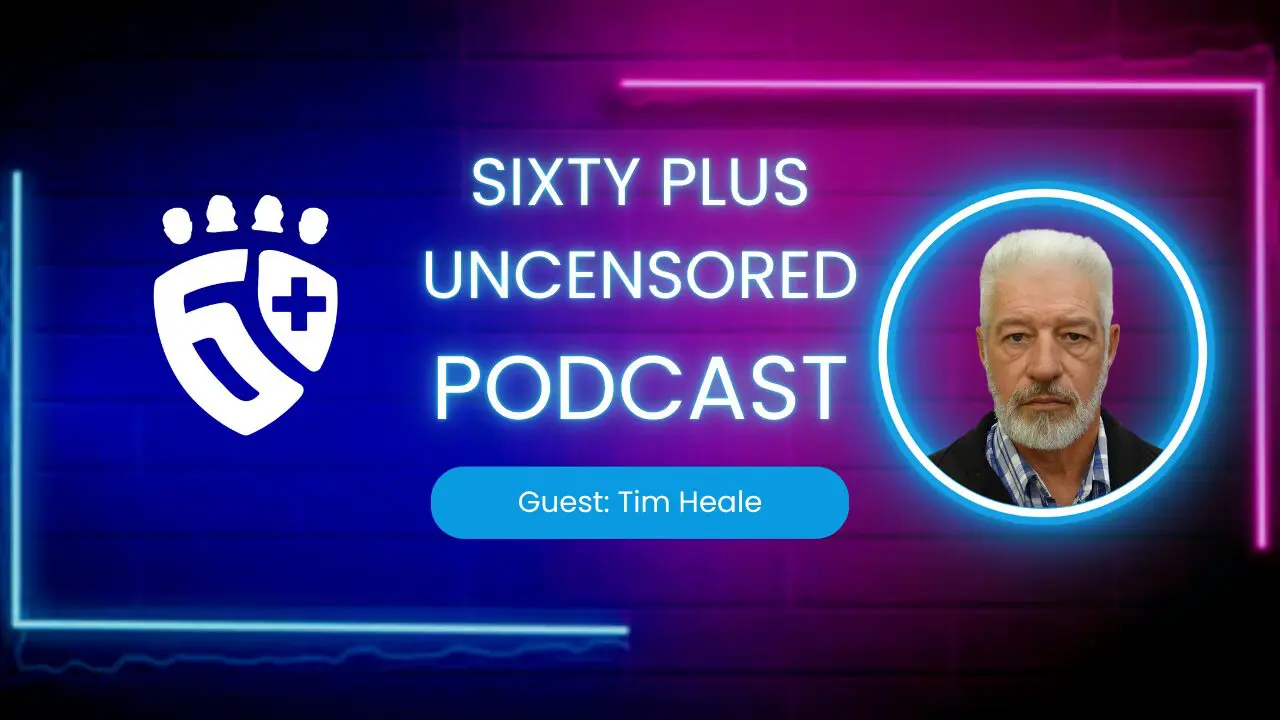
In this episode of Sixty Plus Uncensored, host Seb Frey sits down with Tim Heale, a retired British Army veteran whose life has been shaped by service, resilience, and an ongoing commitment to learning. After spending 44 years in the military, including time as an infantry soldier, Psychological Operations (PsyOps) specialist, and welfare officer, Tim has transitioned into a new chapter filled with writing, broadcasting, and sharing the lessons he has gathered over a lifetime of extraordinary experiences. Their conversation explores much more than military history. It offers thoughtful insights into purpose after retirement, adapting to life’s challenges, and why growing older doesn’t mean slowing down or stopping your contribution to the world.
Sometimes the Path You Didn’t Plan Shapes Your Entire Life
Many people imagine that a lifelong career begins with a carefully considered decision, but Tim’s story was very different. Growing up in a rough neighbourhood north of London, he found himself at a crossroads at just sixteen years old when a judge gave him two options: enter a young offenders institution or join the British Army. Choosing the Army changed the direction of his life forever.
Looking back, Tim openly describes himself as a troubled teenager who needed structure and discipline. What the Army offered wasn’t simply a job, it allowed him to develop responsibility, confidence, and purpose. His story is a reminder that life doesn’t always unfold according to plan. Sometimes the experiences that seem most difficult become the foundation for everything that follows. For many people entering retirement or later adulthood, that idea can be reassuring. Careers may end sooner than expected, health may change, and family responsibilities may shift, but those changes don’t have to define the future. Instead, they can open the door to entirely new opportunities.
Growth Often Comes Through Challenge
Tim describes his early military training without romanticising it. The first weeks were physically demanding, mentally exhausting, and designed to test every recruit’s resilience. Many didn’t make it through because the goal wasn’t simply to teach technical skills, it was to build discipline, teamwork, and the ability to stay calm under pressure. While few people will ever experience military training, the broader lesson applies to everyday life. We rarely grow during comfortable moments. Whether learning to navigate retirement, recovering from illness, caring for a spouse, or adjusting to becoming an empty nester, personal growth often comes through being forced to adapt. That doesn’t make hardship enjoyable, but it does remind us that we’re often far more capable than we initially believe. Later adulthood brings its own version of resilience training. Changes in routine, identity, physical ability, and relationships all require patience and flexibility, qualities that can continue to grow and strengthen throughout life.
Service Isn’t Just About Wearing a Uniform
During his decades in the Army, Tim held a wide variety of roles. He began as an infantry soldier before moving into specialist assignments, eventually serving in the British Army’s Psychological Operations unit. He spent his final years as a welfare officer, supporting soldiers and their families through injuries, rehabilitation, family challenges, and the emotional demands of military life. Although each role was different, one theme connected them all: helping others. As a welfare officer, his work wasn’t focused on combat or military tactics but on listening, solving problems, offering reassurance, and helping people move forward after difficult experiences. In many ways, it required a different kind of strength. These qualities become increasingly valuable later in life. Many older adults naturally step into similar roles within their families and communities, becoming mentors, caregivers, volunteers, trusted neighbors, or simply the person others turn to when life becomes complicated. Purpose doesn’t disappear after retirement, it often simply changes form.
Finding purpose through helping others is a theme explored further in When Retirement Feels Too Small: How to Reclaim Purpose, Connection, and Joy, which looks at meaningful ways to stay engaged after leaving a career.
Understanding People Is More Powerful Than Simply Talking to Them
One of the most fascinating parts of Tim’s career was his work in Psychological Operations, commonly known as PsyOps. Popular culture often portrays PsyOps as secret missions or elaborate schemes designed to manipulate people, but Tim offers a much more thoughtful explanation. At its core, Psychological Operations is about understanding people.
Before creating any campaign, his team spent significant time learning about the local population, studying their culture, traditions, beliefs, daily routines, concerns, and motivations. Only by understanding the audience could they communicate in ways that genuinely made sense. The goal wasn’t simply to broadcast messages, it was to understand how people think.
That lesson extends far beyond military operations. Every meaningful conversation begins with understanding the person you’re speaking with. Whether you’re helping an aging parent, supporting grandchildren, talking with a spouse, or resolving conflict, listening comes before influencing. People rarely respond well when they feel misunderstood, but they become far more open when they feel seen, heard, and respected. It’s a lesson that remains valuable at every stage of life.
Why Good Intentions Aren’t Always Enough
One story Tim shares perfectly illustrates this principle. His team once developed educational material designed to prevent children from picking up unexploded landmines. The concept seemed sensible: the leaflet showed one child reaching toward a landmine while another stood back, with Superman in the background to symbolize protection. But when the leaflet was tested, something unexpected happened. Instead of understanding the danger, many children believed Superman would rescue them if they picked up the mine. Rather than reducing risk, the message could have encouraged dangerous behaviour. Fortunately, the campaign was tested before being widely distributed, allowing the team to redesign it.
The experience highlights an important truth: good intentions alone don’t guarantee good communication. People interpret information through the lens of their own experiences, beliefs, and assumptions. The same principle applies in everyday family life. Adult children may believe they’re helping aging parents by making decisions for them, while parents may see those actions as a loss of independence. Healthcare professionals may offer excellent advice, yet patients can still struggle if the explanation doesn’t address their concerns. Successful communication begins by understanding how the other person sees the situation.
Real Influence Begins with Trust
Tim also shares an example from his deployment in Afghanistan that shows how trust is built gradually rather than demanded. His team helped establish local radio broadcasts designed specifically for Afghan communities. Instead of filling the airtime with foreign music or outside perspectives, they focused on programming that reflected local culture, interests, and familiar voices.
The response grew steadily. At first, only a few listeners sent in song requests. Soon there were dozens, then eventually hundreds. Those requests became clear evidence that people were listening and, more importantly, that they trusted the broadcasts enough to engage with them. Only after building that relationship could the station effectively communicate important public safety messages and other information.
It’s a simple principle that extends far beyond military operations. People are far more receptive when they feel understood and respected. Whether helping a family member consider downsizing, encouraging healthier habits, or discussing future care plans, trust always comes first. Advice without trust often feels like criticism, while advice built on trust feels like support.
Retirement Doesn’t Mean Your Story Is Finished
Many people spend decades imagining retirement as the finish line, a time when work ends, responsibilities become lighter, and life slows down. For some, that vision becomes reality. For Tim, however, retirement marked the beginning of an entirely new chapter. After leaving the Army, he didn’t stop creating. He became a radio presenter, appeared on podcasts around the world, continued sharing lessons from his military career, and, perhaps most surprisingly, became a published author. His writing began almost by accident when he rediscovered letters he had written home while serving in Afghanistan. Those personal reflections eventually became his first book, and one project naturally led to another, including a seven-book fictional series inspired by vivid dreams he had experienced throughout much of his life.
Rather than slowing down, retirement gave Tim the freedom to pursue interests that had long taken a back seat. His experience reflects something many older adults discover: the end of one career often creates space for new forms of creativity and purpose. Some people begin painting, others start businesses, volunteer, mentor younger generations, or finally write the stories they’ve carried for years. The important question isn’t whether retirement marks an ending, it’s what new beginning it makes possible.
You Don’t Have to Stop Learning
One of the most striking aspects of Tim’s story is his willingness to keep learning. Throughout his military career, he repeatedly stepped into entirely different roles, from infantry and Psychological Operations to welfare support, broadcasting, and writing. Each transition required him to develop new skills rather than rely on what he already knew. That mindset becomes increasingly valuable with age. Technology changes, healthcare evolves, families grow, and communities shift. The people who continue asking questions, trying new things, and staying curious often find greater satisfaction than those who believe learning belongs only to younger generations. Curiosity doesn’t have an expiration date. If anything, it becomes even more important as life continues to evolve.
Lifelong curiosity plays an important role in healthy aging, and How Lifelong Learning Keeps Your Brain Sharp After 60 explores why continuing to learn benefits both the mind and overall well-being.
Reinvention Doesn’t Require Perfect Circumstances
One of the most encouraging parts of Tim’s story is that his newest accomplishments didn’t happen despite his challenges, they happened alongside them. Many people assume that becoming an author requires a lifelong love of books or exceptional writing skills, but Tim’s experience tells a different story. He openly shares that he has lived with dyslexia throughout his life. Reading aloud has always been difficult, and even today he jokes that words seem to jump around the page when he’s asked to read from a script. Yet that challenge never stopped him from writing. Instead, he found ways to work with it, using spell-check tools, rereading drafts multiple times, and asking for help when needed. Most importantly, he refused to let one obstacle define what he could or couldn’t do.
It’s an important reminder for anyone who has ever thought, “I’m too old,” “I don’t have the right background,” or “I’m just not good enough.” Meaningful accomplishments rarely happen because everything is easy. More often, they happen because someone decides the goal matters more than the obstacles. For older adults especially, this mindset can be incredibly freeing. Physical limitations, changing energy levels, or health concerns may require doing things differently, but they don’t have to mean giving up. Adaptation is often far more powerful than perfection.
Your Life Experience Is Worth Preserving
Tim’s first published book didn’t begin as a carefully planned writing project. While looking through an old hard drive, he rediscovered the letters he had written home while serving in Afghanistan. They captured ordinary moments, difficult experiences, and personal reflections from a period that had shaped his life. Rather than leaving them buried in old files, he transformed them into a book.
What makes this story especially meaningful is that the letters were never intended for publication. They were simply a way of staying connected with loved ones while deployed. Only years later did Tim recognize their value. Many older adults have similar treasures tucked away, old journals, letters, family photographs, travel stories, career experiences, and life lessons gathered over decades. These memories may seem ordinary to the people who lived them, but they can become priceless gifts for children, grandchildren, and future generations.
You don’t need to have served in the military to have stories worth telling. The first home you bought, the job that changed your life, the challenges of raising a family, or the lessons learned through success and failure all have value. Every life contains experiences others can learn from. Writing them down doesn’t require being a professional author. Sometimes the greatest legacy we leave behind is simply our perspective.
Preserving personal stories and passing on hard-earned wisdom is also at the heart of Legacy Coaching: How to Shape the Story, Values, and Impact You Leave Behind, offering thoughtful ways to leave more than financial assets for future generations.
Creativity Has No Retirement Age
After publishing his first book, Tim could easily have considered it a satisfying accomplishment. Instead, one idea led to another. He began writing a seven-book fictional series inspired by the vivid dreams he had experienced throughout much of his life. What started as a single story gradually grew into something much larger. His experience illustrates something many people discover later in life: creativity often grows with experience. By our sixties and seventies, we’ve accumulated decades of observations, relationships, disappointments, successes, and unexpected turns. Those experiences become the foundation for creating something meaningful. Retirement also offers something earlier stages of life rarely do, time. Time to write, paint, learn an instrument, volunteer, or explore interests that were set aside while careers and family responsibilities came first. The question isn’t whether you’re creative. It’s whether you’ve given yourself permission to explore that creativity.
Staying Curious Keeps Life Interesting
Throughout the conversation, one quality stands out repeatedly: curiosity. Tim didn’t stop learning after leaving military service. He became a radio presenter, embraced podcast interviews, and continued exploring new projects. He remained eager to tell stories, meet new people, and share ideas. This willingness to stay engaged may be one of the most valuable habits for healthy aging. Curiosity encourages us to ask questions instead of making assumptions, introduces us to new people, keeps our minds active, and reminds us there’s always something left to discover. Research consistently suggests that mental engagement, social interaction, and lifelong learning all contribute to better cognitive health as we age. While no single activity guarantees healthy aging, maintaining an interest in the world around us gives us more opportunities to stay mentally and emotionally connected. Curiosity isn’t just about gaining information, it’s about remaining open to possibility.
Purpose Evolves Throughout Life
One subtle but powerful theme throughout Tim’s story is that purpose is never fixed. At sixteen, his purpose was simply survival and finding direction. As a young soldier, it became serving alongside his fellow troops. Later, as a welfare officer, it shifted to supporting soldiers and their families through difficult periods. Today, his purpose has evolved once again through writing books, hosting a radio programme, appearing on podcasts, and sharing the lessons his life has taught him with people from all walks of life.
Each chapter has looked different, yet none has been less meaningful than the one before. Many people worry that retirement will leave them without a sense of purpose because their professional identity has ended. Tim’s story suggests otherwise. Purpose doesn’t come from a job title, it comes from contribution. Whether it’s helping one person, sharing a lesson, encouraging a conversation, or creating something that didn’t exist before, those opportunities remain available at every stage of life.
There Is Value in Looking Back, Without Living There
Tim’s stories naturally involve looking back over decades of military service, but what makes his reflections so engaging is that they aren’t rooted in nostalgia alone. He’s not simply revisiting old memories, he’s using them to better understand the present. The lessons he learned about discipline, leadership, communication, resilience, and adaptability continue to shape the work he does today. That’s an approach many of us can benefit from. Looking back is most valuable when it helps us move forward. Our past can teach us important lessons without keeping us there. Whether reflecting on careers, relationships, parenting, or personal challenges, the goal isn’t to relive every chapter, it’s to carry the wisdom into whatever comes next.
Aging Is Less About Slowing Down Than Continuing to Contribute
One of the biggest misconceptions about growing older is that productivity has an expiration date. Tim’s life offers a compelling counterexample. Approaching seventy, he’s still writing books, producing content, travelling, speaking with audiences around the world, and taking on new projects. That doesn’t mean everyone needs to stay constantly busy. Healthy aging isn’t about filling every hour with work, it’s about continuing to engage with life in ways that feel meaningful. For some, that may mean volunteering once a week. For others, it may involve caring for grandchildren, learning photography, joining a local choir, or mentoring younger professionals. Contribution looks different for everyone, but the important thing is staying connected to something beyond ourselves. Purpose has a remarkable way of creating momentum.
Every Chapter Builds on the Last
If there’s one lesson that emerges most clearly from Tim’s journey, it’s that life doesn’t unfold as one single story. It’s a collection of chapters. Some are difficult, some are exciting, some involve unexpected detours, and others open doors we never imagined. The young man who entered the British Army at sixteen could hardly have predicted that decades later he would become a published author, a radio presenter, and a frequent podcast guest sharing stories with audiences around the world. Yet each stage prepared him for the next. His military service taught resilience, his work in Psychological Operations taught the importance of understanding people, and his time as a welfare officer deepened his compassion. Retirement then created the space to share those experiences in entirely new ways. None of those chapters replaced the ones before. Instead, each one built upon the last, creating a richer, fuller life, a reminder that every stage of life has something valuable to offer and that our next chapter can be just as meaningful as those that came before.
Life’s Greatest Lessons Don’t End at Retirement
Growing older doesn’t diminish our ability to learn, create, contribute, or begin again. If anything, it gives us the perspective and wisdom to approach those opportunities in new ways. Tim Heale’s story isn’t simply about military service or life after retirement, it’s about recognizing that every stage of life offers the chance to grow, adapt, and discover new purpose. For many people entering their sixties and beyond, that’s an encouraging message. The experiences you’ve gathered over a lifetime are not the end of your story, they’re the foundation for whatever comes next. Whether you choose to write your memories, learn a new skill, mentor someone younger, or simply approach each day with curiosity, your next chapter is still yours to create. Aging isn’t about closing doors. It’s about recognizing that there are still many worth opening.