
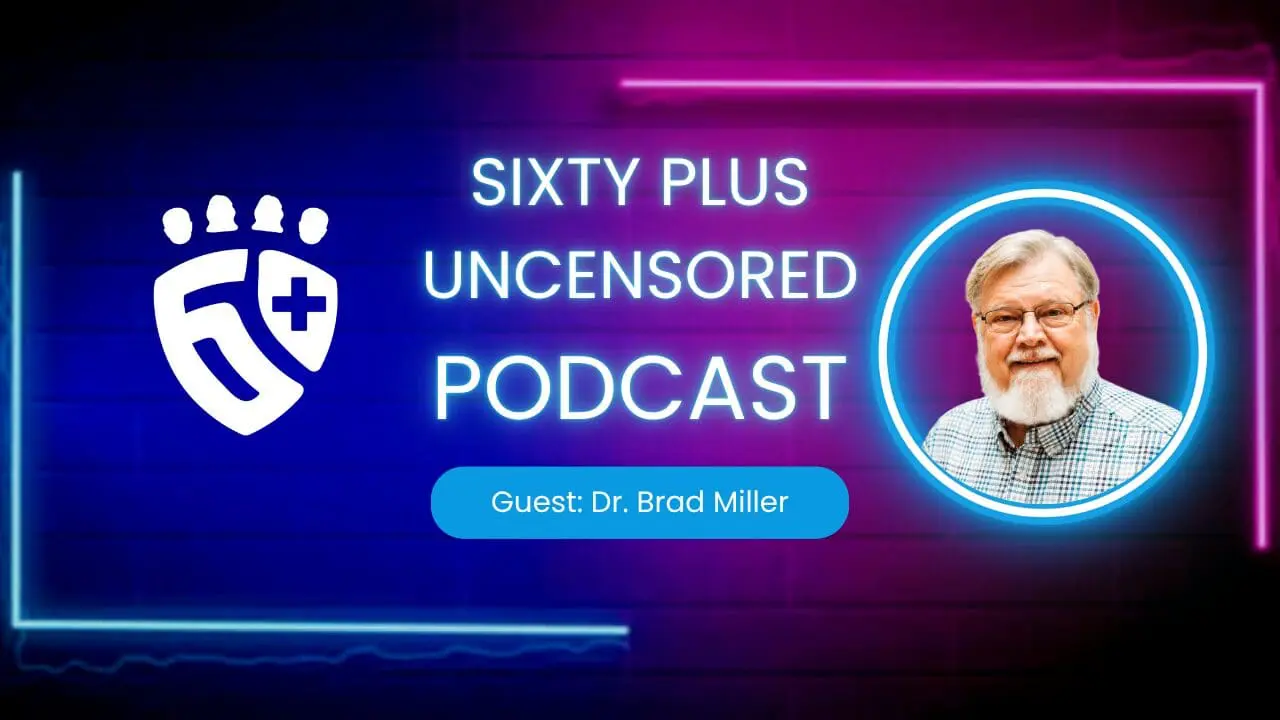
In this episode of Sixty Plus Uncensored, host Seb Frey speaks with Brad Miller, a cancer survivor, former pastor, podcaster, and advocate for what he calls “healing with hope and humor.” After spending more than four decades in ministry, Brad expected retirement to be a season filled with travel, family time, and new adventures. Instead, just weeks after retiring, he received a life-changing prostate cancer diagnosis. What followed was not only a medical journey, but also a personal transformation that reshaped how he viewed purpose, resilience, aging, and what it means to live fully. Their conversation explores the emotional impact of a cancer diagnosis, the role of mindset during adversity, and how purpose, community, and even laughter can help people navigate some of life’s most difficult seasons. Brad explains how the power of humor carried him through some of the hardest days of his life.
When Life Changes Without Warning
Many people spend years imagining retirement. It is often viewed as a reward after decades of work, a time to relax, travel, pursue hobbies, and enjoy family. Brad Miller had similar plans. After 43 years as a pastor, he had recently stepped away from full-time ministry and was looking forward to this new chapter. Then everything changed. At age 63, only weeks into retirement, Brad was diagnosed with aggressive prostate cancer. The diagnosis came as a shock. Like many people who receive life-altering medical news, he suddenly found himself facing uncertainty instead of freedom. Rather than planning vacations and family adventures, he was forced to make difficult decisions about treatment, surgery, and his future.
A cancer diagnosis has a way of changing priorities overnight. The future that once seemed predictable suddenly becomes unclear. Even for people who have spent years helping others through difficult circumstances, as Brad had during his ministry career, the experience feels deeply personal and disorienting when it happens to you. His story serves as a reminder that adversity does not wait for a convenient time. Health challenges, losses, and unexpected setbacks can arrive regardless of our plans. The question becomes not whether difficult things will happen, but how we choose to respond when they do.
Readers navigating major life transitions may also find value in Creating a Fulfilling Lifestyle After Retirement, which explores practical ways to build purpose and meaning when retirement doesn’t unfold as expected.
The Emotional Impact of Serious Illness
When people talk about cancer, much of the conversation focuses on treatment options, surgeries, medications, and survival rates. Those topics matter. But the emotional side of the experience is equally significant. Brad describes the initial reaction to his diagnosis as a state of confusion and disbelief. The news disrupted his sense of stability and forced him to reconsider everything he had assumed about the years ahead.
Many people experience something similar when facing a major setback. Whether it is cancer, the loss of a spouse, financial hardship, divorce, depression, or another life challenge, the first response is often shock. The mind struggles to process what has happened. Brad developed a framework to describe this experience, based partly on his own journey with prostate cancer. He talks about four emotional stages that often accompany adversity.
The first is insanity, the overwhelming confusion that comes when life no longer makes sense. The second is incontinence, which he uses as a metaphor for losing control. Suddenly, circumstances seem to dictate your life instead of the other way around. The third is impotence, representing a loss of power, confidence, or energy. Many people feel weakened emotionally, mentally, or physically when facing serious challenges. Finally, these experiences can lead to insolence, where frustration turns into bitterness, anger, or resentment toward the world. While the terminology is memorable, the underlying message is simple: adversity often creates a downward spiral if we do not intentionally respond to it. Recognizing these emotional reactions is important because it reminds people that their feelings are normal. Fear, confusion, grief, and frustration are natural responses to difficult circumstances. The goal is not to avoid those feelings entirely, but to move through them without allowing them to define the rest of our lives.
A Grandfather’s Turning Point
One of the most meaningful moments in Brad’s story happened not in a hospital, doctor’s office, or therapy session, but inside a McDonald’s restaurant. Shortly after his diagnosis, he and his wife were spending time with their young granddaughters. Brad admits that he was struggling emotionally. He felt discouraged, uncertain, and weighed down by the seriousness of what lay ahead. As the family sat together eating lunch, something unexpected happened.
One of the girls began laughing at something silly. Soon, both granddaughters were giggling uncontrollably. Their laughter spread to Brad, his wife, and even the people around them. The entire atmosphere changed. Then one of his granddaughters looked at him and declared, “You’re my fun grandpa.” The words hit him deeply. In that moment, Brad realized he had a choice. He could continue down the path of fear and discouragement, or he could choose to become the grandfather his grandchildren already believed him to be.
He later described having a vision of those girls many years later. He imagined attending their graduations, weddings, and important milestones. He wanted not only to be alive for those moments, but to be fully present and engaged. That experience gave him a renewed sense of purpose. Purpose does not eliminate adversity, but it often changes how we face it. When people have something meaningful to move toward, they are often better equipped to endure difficult circumstances. For Brad, becoming the “fun grandpa” was more than a family goal. It became a symbol of choosing life, connection, and engagement instead of surrendering to fear.
Why Purpose Matters More Than Ever After 60
One of the themes that emerged throughout the conversation was the importance of purpose later in life. Many people enter their sixties expecting to slow down. Society often portrays aging as a period of decline, withdrawal, and reduced relevance. Yet countless studies and countless real-world examples suggest otherwise. Many adults report greater happiness and life satisfaction in their sixties and seventies than they experienced in earlier decades. They have accumulated wisdom, developed resilience, and gained clarity about what truly matters. The challenge is that retirement can sometimes remove structures that once provided identity and direction. Careers end. Children become independent. Daily routines change. Without a new sense of purpose, some people begin to drift.
Brad’s experience illustrates how purpose can emerge from unexpected circumstances. His cancer diagnosis did not end his contribution to others. In many ways, it created a new opportunity for service. Instead of retreating from the world, he launched a podcast focused on helping people navigate adversity. He began speaking, teaching, writing, and sharing lessons from his own journey. His story reminds us that purpose does not disappear with age. In fact, later life often creates opportunities to focus on what matters most. The question is not whether purpose exists after retirement. The question is whether we are willing to seek it.
For those wondering how to stay engaged and motivated in later life, When Retirement Feels Too Small: How to Reclaim Purpose, Connection, and Joy offers additional insights on creating a meaningful next chapter.
Lessons Learned from a Lifetime of Ministry
Brad spent 43 years serving as a pastor, and those experiences deeply influenced how he approached cancer. Throughout his ministry, he witnessed people facing every imaginable hardship. He sat with families experiencing grief. He counseled individuals dealing with illness, financial crises, addiction, depression, and relationship challenges. Over time, he noticed a pattern. Some people faced adversity with overwhelming fear. Others managed to find peace, meaning, and even joy despite difficult circumstances. The difference was not always the severity of their situation. Sometimes people with similar diagnoses had dramatically different experiences.
Brad recalls one individual who approached death terrified and alone, consumed by fear of what was happening. Shortly afterward, he visited another person facing a similar medical reality. This woman was surrounded by family, supported by her faith, and filled with gratitude despite her physical suffering. The contrast left a lasting impression. He realized that while people cannot always control their circumstances, they often influence how they respond to those circumstances. That insight became one of the foundations of his current work.
The ACTS Plan: A Practical Framework for Moving Forward
Drawing on his experiences in ministry, leadership, and cancer recovery, Brad developed a framework he calls the ACTS Plan. The goal is to help people move beyond paralysis and begin rebuilding a meaningful life.
Action
The first step is action. When adversity strikes, many people become stuck. They spend weeks or months overwhelmed by fear and uncertainty. Action creates momentum. The action may be as simple as scheduling a doctor’s appointment, making a phone call, joining a support group, starting a daily walk, or asking for help. The specific action matters less than the willingness to move forward. Progress rarely begins with a perfect plan. It begins with a first step.
Connection
The second step is connection. Brad emphasizes both spiritual and interpersonal connections. For some people, spirituality provides strength, comfort, and perspective during difficult seasons. For others, connection may come through community, family relationships, friendships, or support groups. What matters is avoiding isolation. Human beings are not designed to carry life’s heaviest burdens alone. Connection creates support, accountability, encouragement, and hope. Whether through faith, family, friendships, or community organizations, meaningful relationships play a critical role in resilience.
Think Strategically
The third step involves intentional thinking. Recovery and growth rarely happen by accident. People need plans, habits, and systems that support their goals. For Brad, this meant creating a medical strategy, improving his health habits, and developing a long-term vision for his future. Thinking strategically does not mean controlling every outcome. It means identifying practical actions that increase the likelihood of positive results. Healthy routines, thoughtful planning, and consistent habits often become the foundation for meaningful change.
Serve Others with Love
The final step is service. This may seem surprising. After all, when people are struggling, it is natural to focus on their own needs. Yet many people discover that helping others becomes an important part of their own healing. Serving others shifts attention away from fear and toward contribution. It reminds people that they still have value and purpose. For Brad, creating content, speaking publicly, and supporting others facing adversity became an extension of his healing process. The more he focused on helping others, the more meaning he found in his own experience.
The importance of community and connection is also explored in Why Senior Home Sharing Might Be Your Smartest Move Yet, which highlights how meaningful relationships can improve well-being and resilience as we age.
The Role of Humor in Healing
One of the most distinctive aspects of Brad’s approach is his emphasis on humor. At first glance, cancer and comedy seem like strange companions. Serious illness is not typically associated with laughter. Yet Brad believes humor serves an important purpose. Humor does not deny reality. It does not pretend that difficult situations are easy. Instead, it creates moments of relief amid the struggle.
Laughter can reduce stress, improve mood, strengthen social connections, and create emotional distance from fear. It reminds people that even during hardship, life still contains moments of joy. Research has increasingly supported the idea that positive emotions contribute to emotional and physical well-being. While humor is not a cure for illness, it can become part of a healthier response to adversity. Brad often references the idea that a cheerful heart can act like medicine. While laughter may not eliminate problems, it can make those problems easier to carry.
Health Habits That Support Resilience
The conversation also touched on practical lifestyle changes. Following his diagnosis, Brad became more intentional about his health. He adopted a lower-carbohydrate eating approach, lost significant weight, improved his diabetes management, and committed to regular exercise. His routine is not built around extreme fitness goals. Instead, it focuses on sustainability. Daily walks, regular gym visits, weight training, and healthier food choices became part of his long-term strategy. The lesson is not that everyone should follow the same diet or exercise plan. Rather, it highlights the importance of taking ownership of the habits that influence health and quality of life. Small daily choices often produce meaningful results over time. For older adults, especially, consistency matters more than perfection.
Creating Meaning Through Podcasting
Another unexpected outcome of Brad’s cancer journey was the growth of his podcasting work. Podcasting became more than a hobby. It became a platform for connection, education, and service. Through interviews and conversations, he has been able to reach people around the world, share stories of resilience, and build relationships that would never have been possible otherwise. For many older adults, technology can seem intimidating. Yet Brad’s experience demonstrates how modern tools can create new opportunities for purpose and impact. People no longer need large organizations or massive budgets to share meaningful ideas. A microphone, an internet connection, and a willingness to serve can open doors to unexpected opportunities. His story serves as a reminder that learning and growth do not stop at retirement. New skills, new projects, and new communities remain available at every stage of life.
Choosing a Life That Finishes Strong
At its core, Brad Miller’s story is not really about cancer. Cancer may have been the catalyst, but the deeper message is about choosing how to respond to adversity. Every person will eventually face setbacks. Some challenges will be physical. Others will be emotional, financial, relational, or spiritual. No one escapes hardship entirely. The question is whether those challenges become the defining feature of our lives. Brad’s answer is clear. Rather than allowing adversity to shrink his world, he chose to expand it. Rather than withdrawing into fear, he leaned into purpose. Rather than becoming the grumpy grandfather he feared he was becoming, he chose to become the fun grandpa his grandchildren already saw. That choice continues to shape his life today.
Brad’s decision to focus on growth rather than limitations echoes the message in Why a Growth Mindset Matters at Any Age, which examines how our perspective can influence the way we respond to challenges and opportunities.
Conclusion: Hope, Humor, and the Courage to Keep Going
Aging does not eliminate challenges. Health issues, losses, and uncertainty are realities that many people face as they grow older. Yet Brad Miller’s story offers a different perspective on what those experiences can mean. His journey shows that adversity does not have to signal the end of growth, contribution, or purpose. Even after a cancer diagnosis, it is possible to build something meaningful, strengthen relationships, help others, and continue pursuing a fulfilling life. Hope is not about denying reality. Humor is not about ignoring pain. Purpose is not about pretending everything is easy. Instead, these qualities help people move forward despite difficult circumstances. For anyone facing a health challenge, supporting a loved one through illness, or simply wondering what comes next in life after 60, Brad’s message is both simple and powerful: take action, stay connected, think intentionally, serve others, and keep moving toward the life you still want to live. The goal is not merely to survive adversity. The goal is to continue living fully, loving deeply, and finishing strong