

Seb Frey is a REALTOR® and founder of Team Sixty Plus, a curated network connecting older adults and their families with trusted professionals across California. With decades of experience helping homeowners 60+ navigate major life transitions—like downsizing, aging in place, or passing on a legacy—Seb brings deep market knowledge, a compassionate approach, and a commitment to simplifying complex decisions. When he’s not advising clients, he’s sharing expert insights on real estate, retirement strategies, and quality-of-life resources for the 60+ community.
There are decisions in life that come with a lot of noise — the kind of noise you hear when you Google five different opinions and end up more overwhelmed than when you started. And then there are decisions that are just quietly heavy — the ones you feel in your chest and try to think through with tears, Google searches, and late-night pacing. Caring for a loved one with Alzheimer’s or another form of dementia falls firmly in the latter category.
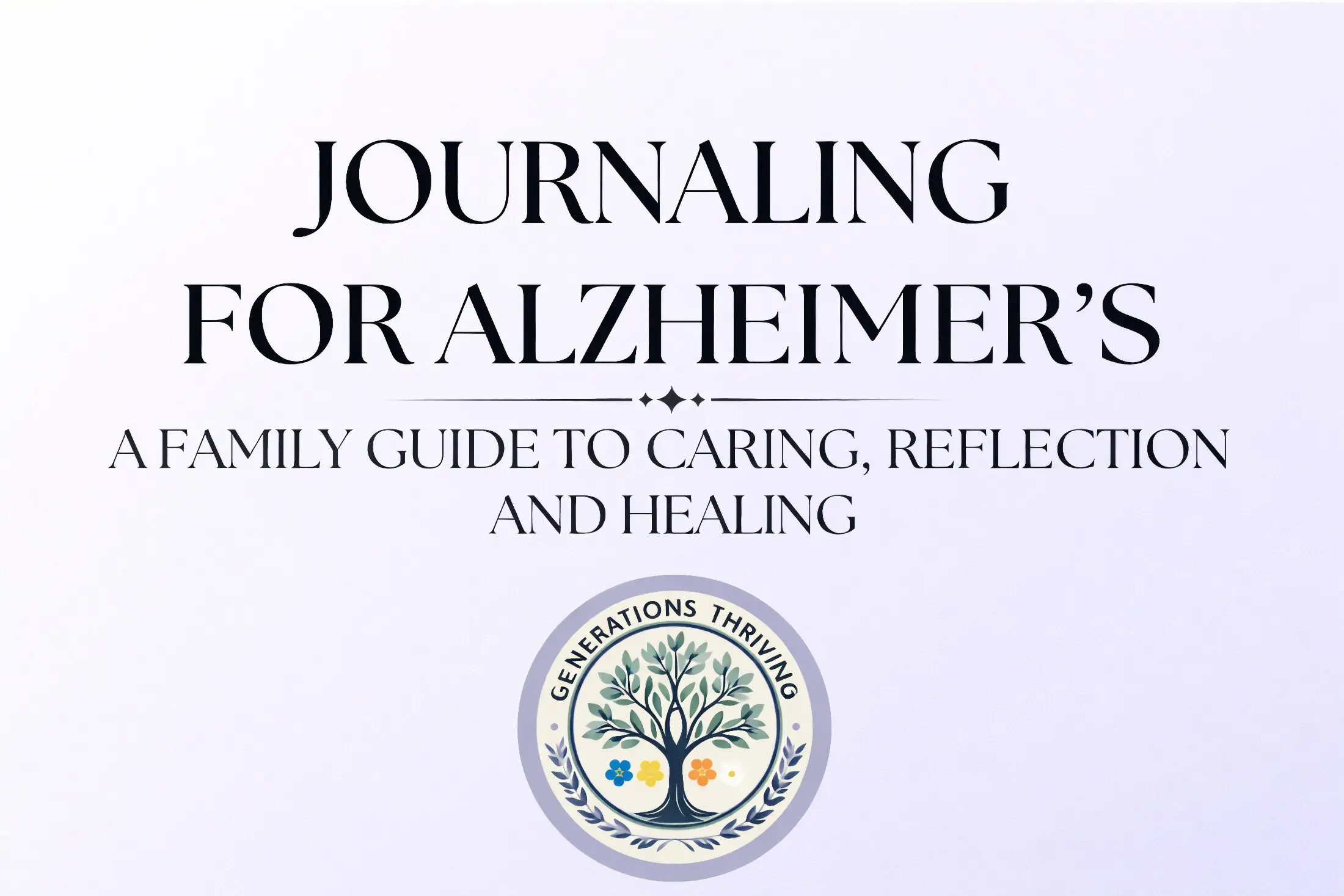
I’ve been helping families make big housing and lifestyle decisions for decades in the Bay Area, and those moments — when someone reaches out saying, “We don’t know what comes next and we’re scared” — are some of the most important and sensitive ones. That’s why I was so drawn to a book like Journaling for Alzheimer’s: A Family Guide to Caring, Reflection, and Healing by Gigi Simsimian. It isn’t just another book on dementia care. It’s written with the assumption that you’re in the middle of it, not studying it from afar. It recognizes that caregiving isn’t purely logistical — it’s emotional, spiritual, and messy.
At its core, Journaling for Alzheimer’s positions itself as a companion and a tool — something to help you capture your experience, understand changes in behavior, and hold onto the humanity at the center of all of it. It’s not a clinical manual, and it doesn’t claim to suddenly make Alzheimer’s easy. But what it does offer is something rare: space. Space to reflect, to track patterns, to make sense of what’s happening day to day, and to notice things you might otherwise overlook.
Why Journaling Matters in Alzheimer’s Care
Before we dive into the specifics of the book, let’s talk about why this kind of journal can be more impactful than you might expect. Caregiving for a person with Alzheimer’s seldom comes with a script. There’s no checklist you can complete that says if X, do Y. Every brain is different, and every family dynamic is different. All you have are moments — good ones, confusing ones, heartbreaking ones — that blur together over time.
Writing, as psychologists and researchers often point out, is not just a memory exercise. It’s a way of structuring your thoughts so your brain doesn’t have to hold them all at once. In situations where memory is changing — for your loved one and for you as the caregiver — journaling becomes a tool for clarity, calm, and self-observation. In research about caregiving and reflective writing, scientists have found that narrative writing can help caregivers process emotional events and reduce stress by carving out mental space for reflection and reappraisal. (If you’ve ever scribbled on a notepad late at night, you know exactly what I’m talking about.)
What Journaling for Alzheimer’s does — and does well — is provide structure to that process.
Tap Into your Home Equity
Need to raise some cash to pay for home improvements, or anything else? Get our Guide on Creative Ways to Tap Into Home Equity
Get our Guide!What This Book Is Trying to Do
The title tells you a lot: “a family guide to caring, reflection, and healing.” This book treats journaling not as a chore, but as a framework for navigating a difficult journey. It encourages families to document what they see — changes in behavior, mood shifts, responses to medications, things that trigger confusion or calm. These kinds of details are incredibly useful when you’re working with clinicians, care teams, or making important decisions about housing and support.
But it also does something equally important: it invites you to reflect. Many care journals are just logs — dry entries about appointments and meds. This one blends caring with reflection and healing. That means it gives space not only for facts but for feelings. Alzheimer’s isn’t just a medical condition; it’s a story you live through, and writing helps you make sense of that story.
One of the things I appreciate about this book — and why I think it resonates with families — is that it isn’t trite. It doesn’t pretend the journey is simple. It acknowledges that there will be hard days, confusing days, and days where your heart is full of both love and grief at the same time. It also acknowledges what many caregivers experience silently: that caregiving changes you. Breathing space for that reality is generous, and something many of us don’t give ourselves.
Practical Use and Everyday Value
What makes Journaling for Alzheimer’s more than just a journal is how it bridges between your daily notes and your big decisions. Alzheimer’s care isn’t only about tracking symptoms; it’s about understanding patterns. When dinner is consistently stressful, when mornings are calm, or when certain stimuli lead to distress — these are clues to what care strategies might help.
This book encourages you to pay attention to those patterns. Writing them down isn’t just cathartic — it’s clinically useful. When you bring notes like this to doctors, therapists, or care planning meetings, you are no longer guessing or relying on memory. You are bringing documented observations that can inform medication adjustments, therapy tweaks, or decisions about living environments.
For example, many families I work with struggle with questions like: “When is it time to think about memory care?” or “Why does my loved one react this way in the afternoon?” A journal like this transforms vague impressions into concrete data, which is incredibly empowering.
Emotional Healing and Reflection
Another layer this book introduces is the idea that caregiving is also a form of emotional work. This isn’t just about watching for triggers and symptoms — it’s about witnessing the person you love change over time. That is jarring in ways that most of us aren’t prepared for. What makes journaling so powerful is that it gives you a conversation with yourself — a way to articulate feelings you might otherwise shove down because you’re focused on practicalities.
The reflective prompts in this book help you ask yourself questions you might be afraid to say out loud: “What do I miss about the way things used to be?” “When do I feel hope?” “What small moments made me laugh today?” There’s real value in capturing that nuance — not just for your own emotional health, but for the legacy you’re documenting about your loved one’s life.

Time to Downsize?
Discover the joy of letting go! Our guide to Downsizing helps you downsize with ease.
A Tool That Grows With You
One of the strengths of Journaling for Alzheimer’s is its flexibility. It doesn’t tell you how to feel. It doesn’t enforce a rigid structure that feels impossible to maintain. Instead, it gives you enough scaffolding that you can build your own pattern.
Some days you might only write a sentence. Other days, you might reflect at length. That’s okay. The book meets you where you are, and that’s what makes it sustainable. Many caregiving supports fail because they feel like extra work. This one feels like a partner in the work.
Larger Context: Why This Matters Now
If you think about the populations like California specifically — with one of the highest proportions of older adults in the country and caregivers juggling careers, tech jobs, family, and complex healthcare systems — having a tool that helps you manage the emotional and practical side of Alzheimer’s care is invaluable.
Caregiving here often means coordinating between multiple specialists, navigating housing and support services, and making decisions that have long-term financial and lifestyle implications. Having a journal that captures the why behind behaviors and trends adds clarity to those decisions. It’s not just about what happened today, but what it pointed to for next week, next month, or next year.
Comparing to Other Journaling Tools
There are many journals out there — from simple reflection books to structured caregiver logs — but this one is distinct in that it treats the Alzheimer’s journey as both an emotional narrative and a clinical arc. It is not purely a medical log book, and it is not purely a memoir. It is intentionally both.
Books like Creating Moments of Joy Along the Alzheimer’s Journey focus on daily interactions and joyful experiences, and books like The 36-Hour Day are deep guides to caregiving logistics and context. But Journaling for Alzheimer’s fills a niche in between: it helps you document what’s happening, understand how you’re feeling about it, and use what you’ve written in real caregiving and planning conversations.
This matters because caregiving is both logistical and human. If you focus exclusively on checklists, you risk losing connection with the person you’re caring for. If you focus exclusively on emotion without structure, you risk burnout because there’s no framework to catch the details that matter later. A well-designed journaling tool gently holds both.
Who This Book Is For
This isn’t a book only for people who love writing or those with free time to compose daily essays. It’s for anyone who wants to make caregiving more manageable, more intentional, and more humane. Whether you’re early in the Alzheimer’s journey or you’ve been caregiving for years, this guide will help you see patterns you might otherwise miss.
I also appreciate that it validates the full range of caregiver experience — the grief, the small victories, the confusion, and the moments of clarity. Caregiving is not a linear process, and this journal doesn’t pretend it is. That honesty is rare and valuable.
Final Take
At a time when families are often overwhelmed by clinical recommendations, medical jargon, and logistics, Journaling for Alzheimer’s offers something different: it gives you back your own narrative.
It helps you notice, remember, reflect, and, in doing so, make care decisions from a place of understanding rather than foggy memory or anxiety. It turns your caregiving experience into a resource — for your own insight, for your conversations with care teams, and for the memory of the life you are witnessing unfold.
If you’re a caregiver balancing work, family, and the challenges of dementia care, this book deserves a place on your desk. It won’t solve every problem — nothing can — but it will help you think more clearly, care more intentionally, and hold onto meaning even when the path feels uncertain.
Whether you’re just beginning this journey or deep in the middle of it, Journaling for Alzheimer’s isn’t a guidebook that tells you what to do. It’s a companion that helps you see what you’ve already lived through with fresh eyes, perspective, and purpose.
You Need a Winning Strategy
When it comes to navigating the ocean of resources for older adults, it helps – a lot – to have someone who can show you the way. Book a call with a coach to save time, money, and no small amount of frustration.
Click Here to Book a Call