

Seb Frey is a REALTOR® and founder of Team Sixty Plus, a curated network connecting older adults and their families with trusted professionals across California. With decades of experience helping homeowners 60+ navigate major life transitions—like downsizing, aging in place, or passing on a legacy—Seb brings deep market knowledge, a compassionate approach, and a commitment to simplifying complex decisions. When he’s not advising clients, he’s sharing expert insights on real estate, retirement strategies, and quality-of-life resources for the 60+ community.
Few films manage to capture the raw vulnerability, emotional complexity, and quiet strength of living with Alzheimer’s disease as effectively as Still Alice. Released in 2014 and adapted from Lisa Genova’s bestselling novel, the film follows Dr. Alice Howland (Julianne Moore), a renowned linguistics professor and devoted mother, whose life begins to unravel after a diagnosis of early-onset Alzheimer’s at age 50.
For families, caregivers, professionals working with older adults, and anyone touched by cognitive decline—and that’s most of us at Team Sixty Plus—Still Alice remains one of the most empathetic and accessible cinematic portrayals of dementia to date. The film doesn’t rely on melodrama, cheap sentimentality, or shock value. Instead, it offers a deeply human, grounded view of what it means to lose memories while still yearning to hold onto one’s sense of self.
This review explores Still Alice from multiple angles: its storytelling, performances, realism, themes relevant to aging, and what older adults and their families can take away. It also positions the film within the broader conversation on cognitive health, caregiving, and the emotional challenges of navigating Alzheimer’s.
A Story That Feels Personal, Whether or Not Alzheimer’s Has Touched Your Life
At its core, Still Alice is the story of a woman who has built her life around mastery—mastery of language, of intellect, of career, and even of family routines. When the early signs of Alzheimer’s appear, they seem almost innocent: forgetting a word mid-lecture, losing her place on a familiar jogging route, or momentarily struggling to recall names.
These scenes are unsettling because they are so ordinary. Anyone over 50 has experienced a similar mental slip and wondered, even briefly, what it meant. Still Alice uses that universality to powerful effect. Rather than immediately plunging into advanced dementia, the film takes its time showing Alice’s confusion, embarrassment, and growing alarm.
For viewers—particularly older adults or their loved ones—this gentle progression is what makes the story resonate. While the diagnosis comes early in the film, the emotional journey unfolds slowly, reflecting the real-world nature of Alzheimer’s: subtle at first, then increasingly disruptive.
Tap Into your Home Equity
Need to raise some cash to pay for home improvements, or anything else? Get our Guide on Creative Ways to Tap Into Home Equity
Get our Guide!Julianne Moore’s Oscar-Winning Performance: Why It Matters
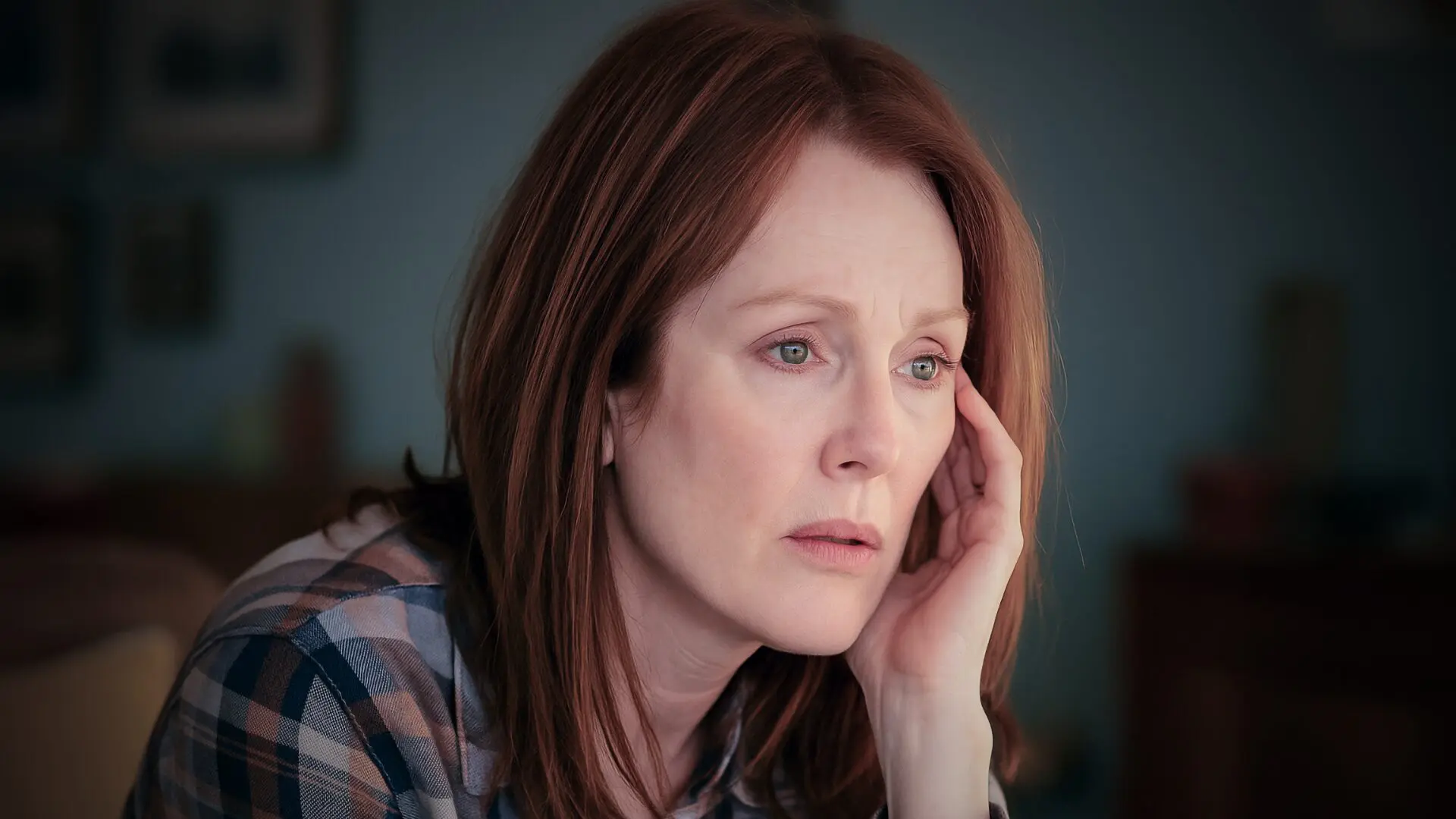
Julianne Moore’s portrayal of Alice Howland is the heart of the film. Her performance is understated yet devastating, avoiding the clichés that often characterize movies about cognitive decline. Instead of exaggerated breakdowns, Moore shows small but poignant cracks in Alice’s confidence—hesitations, flickers of confusion, and the quiet panic of losing her intellectual footing.
Moore earned an Academy Award for Best Actress for this role, and it’s easy to see why. Her Alice is not simply a patient; she’s a person fighting to remain present, connected, and dignified even as the disease progresses.
For older adults and caregivers, this kind of representation is meaningful. It acknowledges that individuals experiencing Alzheimer’s are not defined solely by their diagnosis. They are still parents, partners, professionals, thinkers, and friends—still themselves—even as parts of their identity slip away.
The film’s title, Still Alice, underscores this idea beautifully.
A Thoughtful Portrayal of Family Dynamics Under Stress
The Howland family’s response to Alice’s diagnosis feels authentic and grounded. Alec Baldwin plays her husband, John, a fellow academic who initially grapples with denial and emotional withdrawal. Their children—played by Kate Bosworth, Hunter Parrish, and Kristen Stewart—react in ways that reflect the diversity of real families: fear, avoidance, compassion, and in some cases, extraordinary patience.
Kristen Stewart’s character, Lydia, stands out. A struggling actor living on the opposite coast, she initially seems detached from the family’s academic rigidity. But as Alice’s disease progresses, Lydia becomes the child most emotionally attuned to her mother’s needs. Their later scenes together—quiet, tender, and unforced—capture the intimate, sometimes unexpected connections that emerge in the caregiving journey.
Families watching the film often recognize themselves in these dynamics: the tensions, guilt, disagreements over care decisions, and competing visions of what’s “best.” The film doesn’t glamorize caregiving. Instead, it portrays it as something deeply human—messy, difficult, and profoundly meaningful.
Early-Onset Alzheimer’s: A Rare but Important Part of the Conversation
Most people diagnosed with Alzheimer’s are over 65, but Still Alice focuses on early-onset Alzheimer’s, which affects people in their 40s and 50s. While this form of the disease is relatively rare, the film uses it to explore a dimension of dementia that is less commonly portrayed: the impact on career, identity, and future plans rather than solely retirement and aging.
Alice’s diagnosis threatens her professional life first. Her career as a linguistics professor—a field dependent on memory, language, and cognition—becomes impossible to sustain. She loses her position, not because she lacks capability as a person, but because Alzheimer’s is unforgiving in its erosion of the very skills that defined her.
For viewers approaching or beyond traditional retirement age, this aspect of the film can serve as a reminder of how cognitive decline affects not only memory but also one’s sense of purpose. Many older adults face similar questions after a dementia diagnosis: What happens to my independence? How much control can I retain? How do I preserve meaning in my life?
Still Alice doesn’t offer easy answers, but it acknowledges these fears with sensitivity and honesty.

Everyone Needs a Little Help Sometimes
There’s so much to know when it comes to lifestyle choices for Older Adults, it’s hard to know even where to begin. One way is to simply click on the button below and let one of our coaches give some guidance – at no cost to you.
Get Help NowMemory, Identity, and Dignity: Key Themes for Older Adults
Alzheimer’s ultimately threatens the most intimate part of a person: their identity. For Alice, whose life revolves around language, the erosion of words feels like the erosion of self. She attempts to compensate by using technology, creating notes for herself, and engaging in mental exercises. But gradually, the disease surpasses her coping strategies.
One of the most moving aspects of the film is how Alice fights to maintain dignity. She makes heartfelt speeches, records messages to her future self, and openly acknowledges her fears. These scenes resonate deeply with older adults who want to remain active participants in their own lives, even when physical or cognitive challenges arise.
The film suggests a powerful truth: identity is not solely memory but also connection. In her most vulnerable moments, Alice’s relationships—especially with Lydia—anchor her. She may forget dates, places, faces, even words, but emotional memory persists long after logical memory fades. This insight reflects what many families discover in real-life caregiving: moments of recognition, tenderness, and clarity can appear unexpectedly, even in advanced stages of the disease.
An Honest Look at Caregiving, Burden, and Sacrifice
While Still Alice is told primarily from Alice’s perspective, it dedicates substantial emotional weight to the caregiving journey. John struggles with the demands of caring for Alice while maintaining his career. Their children wrestle with decisions about genetic testing, long-term care, and their own futures.
The film does not vilify any character’s choices. It simply shows the complexity of caregiving—how it stretches emotions, time, finances, and relationships.
Older adults and family caregivers often remark on how accurately the film portrays the “gray zones” of dementia care:
- When does independence become unsafe?
- How much should a spouse sacrifice professionally?
- When do children step in, and how?
- At what point does home care become unsustainable?
Instead of dramatizing these decisions, Still Alice presents them gently but truthfully. This makes the film especially useful for families beginning to confront Alzheimer’s or mild cognitive impairment.
How Realistic Is the Film’s Depiction of Alzheimer’s?
Though dramatized, Still Alice is widely regarded by medical professionals, caregivers, and Alzheimer’s researchers as one of the most realistic portrayals of the disease on film. Key elements noted for their accuracy include:
Gradual cognitive decline
The progression from mild lapses to more serious symptoms is portrayed with remarkable subtlety.
Emotional changes
Frustration, anxiety, fear, and moments of despair are presented honestly and without exaggeration.
Variation in functioning
Even later in the film, Alice experiences moments of clarity—a hallmark of real dementia.
Family stress
The film captures the toll Alzheimer’s takes on relationships without turning family members into caricatures.
While some critics argue that the story softens the harsher, more physically demanding later stages of dementia, the film’s focus on early-to-mid progression is deliberate. It is meant to educate, raise awareness, and humanize, not shock.
For many older adults, this balance makes the film accessible rather than overwhelming.
Retirement Planning for Older Adults
Are you a little late to the retirement planning game? Get this comprehensive guide and get caught up!
Get the Guide!Why Still Alice Is an Important Film for Older Adults and Their Families
The film serves several meaningful purposes for older adults, professionals in senior living, and families navigating aging-related decisions.
It builds awareness
Few movies portray Alzheimer’s from the inside out. By showing the disease from Alice’s viewpoint, the film encourages empathy and understanding.
It opens conversations
Families who watch together often discuss topics they’ve been avoiding, such as memory concerns, future planning, and care preferences.
It reduces stigma
Alzheimer’s is often misunderstood or hidden. Seeing an accomplished, vital woman face it openly helps reduce shame and fear.
It highlights the importance of early diagnosis
While an early diagnosis can be frightening, it also allows individuals and families to plan, adapt, and preserve quality of life.
It reflects real emotional experiences
Whether you’re over 60, caring for aging parents, or concerned about cognitive health, Still Alice resonates in deeply personal ways.
Cinematic Craft: A Simple Film with Substantial Emotional Impact
Still Alice is intentionally understated. Its directing style is quiet, almost minimalist. There are no dramatic musical cues or flashy camera tricks. Instead, the film mirrors Alice’s mental landscape—ordered at first, then increasingly fragmented.
Lighting, pacing, and framing subtly shift as the disease progresses, giving viewers a sense of disorientation mirroring Alice’s own experiences. Scenes become shorter, conversations blur, and visual cues feel less stable.
This approach may seem simple, but it’s emotionally effective. It situates the viewer inside Alice’s perspective rather than observing her from afar.
The Role of Genetics: A Critical Element for Many Older Adults
The film touches briefly but meaningfully on the genetic component of Alzheimer’s. Alice’s diagnosis is tied to a rare, inherited gene mutation. This adds another layer of emotional complexity for her children, who must decide whether to undergo their own genetic testing.
For readers of Team Sixty Plus, this is an important part of the conversation. While most Alzheimer’s cases are not genetic, family history is still a factor, and the film helps clarify this distinction. It opens the door to discussions about:
- genetic counseling
- lifestyle interventions
- early screening
- brain-healthy habits
- planning for long-term care
Though Still Alice doesn’t dive deep into medical detail, its treatment of genetics is responsible and sensitive.
Retirement Planning for Older Adults
Are you a little late to the retirement planning game? Get this comprehensive guide and get caught up!
Get the Guide!Why This Film Continues to Be Recommended by Gerontologists, Dementia Specialists, and Senior Advisors
A decade after its release, Still Alice remains one of the most widely recommended movies for families facing dementia. Professionals in aging, caregiving, and memory care often encourage clients and families to watch the film together for several reasons:
It humanizes Alzheimer’s
Instead of portraying individuals with dementia as confused or diminished, the film highlights their inner life.
It sparks meaningful conversations
Families often find it easier to talk about a fictional story than to start with their own fears.
It offers emotional validation
Caregivers recognize themselves in the story. People with early symptoms may feel seen rather than isolated.
It shows the importance of compassionate communication
Lydia’s scenes with her mother provide a gentle model for how to connect emotionally when memory is fading.
It acknowledges both hope and heartbreak
The story honors the dignity of those living with dementia while respecting the genuine pain the disease causes.
SEO Insights: Why Still Alice Matters for Readers Focused on Aging Well
From an SEO perspective—particularly for a site like Team Sixty Plus—the film intersects with major topics that older adults actively search for:
“Signs of early Alzheimer’s”
The film provides relatable examples that align with common symptoms searched online.
“Coping with memory loss”
Alice’s journey illustrates both practical strategies and emotional realities.
“How families can support a loved one with dementia”
The film subtly shows what supportive communication looks like.
“Genetic Alzheimer’s vs. late-onset Alzheimer’s”
The story highlights the difference in a way that readers can understand.
“How to talk to your aging parents about cognitive health”
The film offers a natural entry point into this often sensitive discussion.
Because Still Alice touches on these themes, reviews and articles connected to the film often perform well for audiences researching aging, caregiving, and senior living.
Final Thoughts: A Compassionate, Essential Film for Anyone Navigating Aging and Cognitive Health
Still Alice is more than a story about Alzheimer’s disease. It is a story about identity, resilience, and the bonds that hold families together even as memories fade. For older adults—especially those concerned about cognitive health—or for families navigating the challenges of caregiving, the film provides a powerful mix of honesty, empathy, and hope.
It neither sugarcoats the impact of Alzheimer’s nor portrays it as an impossible burden. Instead, it captures the emotional truth of the disease: terrifying at times, heartbreaking often, but still filled with moments of connection, meaning, and personal strength.
Whether you are caring for aging parents, exploring memory-support options, planning for the future, or simply trying to understand the lived experience of Alzheimer’s, Still Alice is a film worth watching, revisiting, and discussing.
Its message endures: even in the midst of cognitive decline, humanity persists. Love persists. Connection persists. Alice is still Alice—and every older adult facing memory challenges deserves the same recognition, dignity, and compassion.
You Need a Winning Strategy
When it comes to navigating the ocean of resources for older adults, it helps – a lot – to have someone who can show you the way. Book a call with a coach to save time, money, and no small amount of frustration.
Click Here to Book a Call