

Seb Frey is a REALTOR® and founder of Team Sixty Plus, a curated network connecting older adults and their families with trusted professionals across California. With decades of experience helping homeowners 60+ navigate major life transitions—like downsizing, aging in place, or passing on a legacy—Seb brings deep market knowledge, a compassionate approach, and a commitment to simplifying complex decisions. When he’s not advising clients, he’s sharing expert insights on real estate, retirement strategies, and quality-of-life resources for the 60+ community.
About the Author: Mark T. Oelze
Mark T. Oelze is a seasoned counselor, speaker, and educator whose career centers on helping people cultivate healthier, more meaningful relationships. Drawing from years of counseling couples, families, and organizations, he developed a unique communication framework he calls PLEDGEtalk. Oelze’s expertise lies in bridging theory and practice, delivering concepts in ways that feel personal and actionable.
As an author, Oelze writes with the authority of a counselor who has sat in countless tense sessions and helped people navigate real conflict. But he also brings a deep personal compassion—his writing never feels academic for its own sake. He is driven by the conviction that better communication is not just a skill but an expression of love and respect for others.
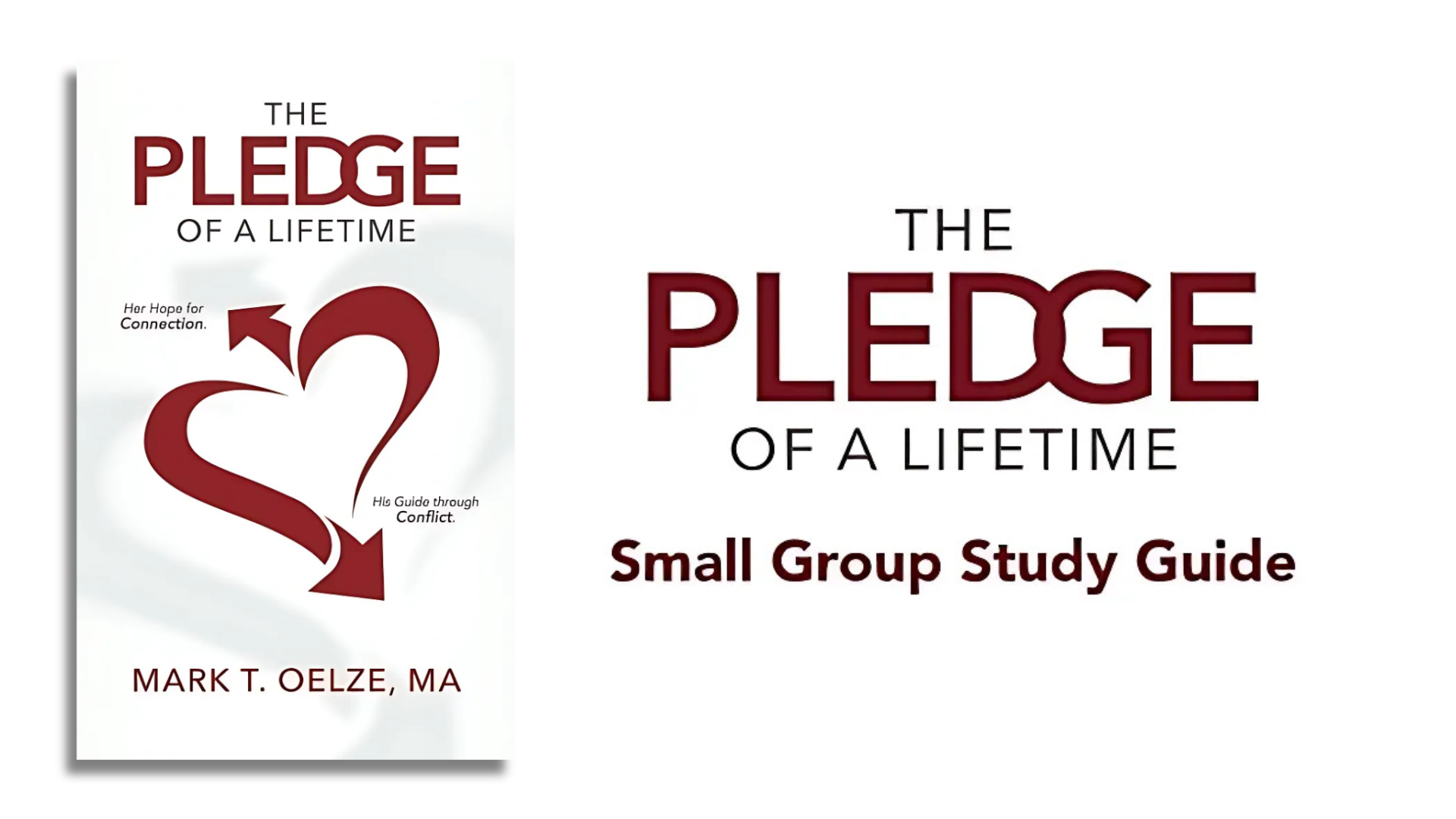
In The PLEDGE of a Lifetime, Oelze distills decades of wisdom into a clear, repeatable framework for conflict resolution—one he’s road-tested in his counseling practice. His goal is not simply to reduce arguments but to transform them into opportunities for deeper connection. His approach is distinctly values-driven, rooted in empathy, patience, and an emphasis on love as the highest goal in communication.
Overview of the Book
The PLEDGE of a Lifetime is both a practical manual and a narrative guide that teaches readers how to transform conflict into meaningful connection. The book alternates between:
- Didactic explanation of a clear 6-step framework (summarized by the acronym PLEDGE).
- A narrative case study following a fictional couple, Jake and Lisa, as they move from destructive conflict patterns to richer, more vulnerable conversations.
Rather than being a purely theoretical text, it’s designed as a step-by-step guide—the reader can use the acronym to guide their next difficult conversation. This approach aims to demystify conflict resolution and make it approachable, even for those who feel conflict-avoidant or stuck in negative cycles.
The book’s core promise is: You can learn to navigate conflict in a way that creates greater trust, understanding, and connection. Oelze’s framework is intended to work not only for romantic relationships but for families, workplaces, and communities.
Check out our blog: Secrets of Super-Agers: Wisdom From People in Their 80s and 90s
Structure and Content
The Framing Question
Early in the book, Oelze asks a disarmingly simple question:
“What is it about conflict that causes all of us to shy away?”
This question resonates because nearly everyone has felt that cold grip of fear or tension in the face of disagreement. Oelze explains that most of us avoid conflict because we fear pain, rejection, or escalation. But he argues that avoidance simply buries problems and allows them to fester.
Instead of viewing conflict as a threat, Oelze challenges readers to see it as an opportunity—a chance to deepen connection by communicating honestly, vulnerably, and respectfully.
Medicare Made Simple
Medicare can be complicated – so let us break it down for you! Get our quick and easy guide, Medicare Made Simple!
Get the Guide!The PLEDGE Acronym
The heart of the book is Oelze’s PLEDGE framework:
- P: Pause
- L: Listen
- E: Empathize
- D: Disclose
- G: Give and receive feedback
- E: Evaluate and decide
Each step is unpacked carefully. Here’s a brief overview of how Oelze describes them:
- Pause: Instead of reacting impulsively, take a moment to breathe and center yourself. This disrupts the cycle of escalation.
- Listen: Genuinely hear the other person’s perspective without interrupting or preparing a rebuttal.
- Empathize: Seek to understand not just the words, but the emotions and needs beneath them.
- Disclose: Share your own feelings and needs vulnerably and honestly.
- Give and receive feedback: Exchange reflections in a spirit of openness, not blame.
- Evaluate and decide: Collaboratively consider solutions or agreements that respect both parties.
What’s compelling is that this is not just a mnemonic trick—it’s a carefully thought-out process that aligns with principles from counseling psychology, conflict mediation, and even nonviolent communication (NVC).
The Story of Jake and Lisa
Rather than simply lecturing, Oelze introduces readers to Jake and Lisa, a fictional couple whose recurring fights leave them exhausted and disconnected. Their story is woven throughout the book in a series of dialogues and reflections.
Initially, their conflict patterns are painfully familiar: raised voices, accusations, defensiveness, and withdrawal. But as they begin applying the PLEDGE process (with guidance modeled on Oelze’s counseling approach), readers see their conversations slow down, deepen, and become safer.
For example:
- Pause shows them interrupting the usual escalation, choosing to step away for a moment instead of firing back.
- Listen challenges them to really hear each other’s fears and hurts.
- Empathize allows them to see the pain beneath the anger.
- Disclose helps them admit fears they’ve never voiced before.
- Give and receive feedback turns the exchange from a battle to a collaboration.
- Evaluate and decide helps them make real, sustainable agreements.
These scenes aren’t melodramatic but feel realistic, even mundane—which is precisely the point. Oelze wants readers to see that this transformation is not magical but accessible to anyone willing to try.
For a real-world example of how communication challenges arise during difficult life transitions, you can check out our blog on selling a senior’s home to pay for care when crisis hits
Retirement Planning for Older Adults
Are you a little late to the retirement planning game? Get this comprehensive guide and get caught up!
Get the Guide!What Makes This Book Stand Out
1. Accessible and Practical
One of the book’s biggest strengths is how accessible it is. Oelze writes in a conversational, direct style that avoids jargon. The acronym is memorable and easy to follow.
Many communication books overwhelm readers with theory or case studies that feel too polished to be relatable. The PLEDGE of a Lifetime avoids that trap. By following Jake and Lisa through their messy, vulnerable process, readers see exactly how the framework applies in real life.
2. Empathy-Driven Approach
Oelze emphasizes empathy and love as the highest goals in communication. Conflict is not just a problem to be solved but an opportunity to love someone better.
This philosophical grounding distinguishes the book from purely tactical guides. Readers aren’t just learning how to “win” arguments or negotiate compromises—they’re being invited to cultivate character qualities like patience, humility, and compassion.
3. Versatility
Though the narrative focuses on a married couple, Oelze repeatedly stresses that PLEDGEtalk is meant for any relationship: parent-child conflicts, workplace disagreements, organizational tensions, and even community disputes.
He wants to see families transformed, but also workplaces that function with more psychological safety, and communities that can navigate polarizing issues with more grace.
4. Therapist’s Insight
Because Oelze writes as a counselor, he anticipates readers’ resistance:
- “But what if I’m too angry to listen?”
- “What if the other person won’t cooperate?”
- “What if I’m afraid to be vulnerable?”
He addresses these questions head-on, offering real strategies without sugarcoating the difficulty. His tone is encouraging but never patronizing.
5. Values-Driven Without Being Preachy
Though the book clearly emerges from Oelze’s values—rooted in love, patience, and self-awareness—it doesn’t require readers to adopt any particular ideology or faith background. It’s practical wisdom that feels human and universal.
For another example of how consistency and structure support growth in later life, check out our guide to intermittent fasting for older adults.

Time to Downsize?
Discover the joy of letting go! Our guide to Downsizing helps you downsize with ease.
Points for Reflection
While The PLEDGE of a Lifetime delivers a powerful and accessible roadmap for better conflict resolution, readers will get the most out of it if they reflect carefully on how it applies to their own situations. Here are some important points to consider:
1. Best Suited for Everyday Conflicts
This book shines in helping readers manage everyday disagreements—marital tensions, family spats, workplace misunderstandings. The PLEDGE process excels at these kinds of conflicts where the goal is mutual understanding and lasting connection.
However, for conflicts rooted in severe betrayal, abuse, or trauma, the book’s approach is less appropriate. Oelze himself gently signals this limitation: the PLEDGE process assumes a baseline of safety and goodwill that isn’t always present in all relationships. Readers in those situations will need other resources or professional help.
2. Relies on Shared Participation
The framework offers a clear path for anyone to communicate more effectively, even if the other party doesn’t fully “play along.” Yet its greatest strength appears when both people commit to the process.
If only one person is willing to pause, listen, and empathize while the other remains combative or closed off, progress can be slow or uneven. Readers should remember that while they can control their own responses, they can’t guarantee change in someone else.
3. Emphasis on Internal Work
One of the book’s most striking qualities is its focus on personal responsibility in conflict. It asks readers to slow down, reflect, and choose empathy over blame. While this is powerful, it also demands a level of self-awareness and humility that not everyone finds easy.
Readers looking for “quick fixes” or tips to “win” arguments will find the approach challenging. Oelze isn’t offering clever debate strategies—he’s offering a framework for more meaningful, vulnerable communication.
4. A Teaching Tool More than a Page-Turner
The book has a clear teaching mission, and much of its structure is designed for practice and reinforcement. That means some sections revisit the same ideas from multiple angles, particularly through the story of Jake and Lisa.
Readers looking for a fast-paced or purely narrative experience might find this repetitive at times. But for those truly wanting to learn and apply the PLEDGE process, this repetition serves as intentional, useful reinforcement.
5. Scope is Intentionally Focused
Though Oelze suggests the model can help families, teams, and even communities, the deepest guidance is in interpersonal conflict—one-on-one or small-group settings. Readers wanting a detailed approach to large-scale social or cultural conflicts will need to adapt the ideas creatively or look elsewhere for specialized frameworks.
Final Thoughts on These Reflections
These points are not so much criticisms as considerations for the reader. They help set realistic expectations.
The PLEDGE of a Lifetime is not a cure-all for every conflict scenario, nor does it claim to be. Instead, it offers a deeply humane, practical, and compassionate method for transforming the conversations that matter most in daily life. Readers willing to engage with it thoughtfully will find its lessons both challenging and rewarding.
You Need a Winning Strategy
When it comes to navigating the ocean of resources for older adults, it helps – a lot – to have someone who can show you the way. Book a call with a coach to save time, money, and no small amount of frustration.
Click Here to Book a CallNotable Passages
A few memorable lines illustrate Oelze’s approach:
“Conflict isn’t the enemy. It’s the doorway to understanding.”
“When you pause, you choose connection over reaction.”
“Listening is not about agreeing, but about making someone feel seen.”
These kinds of lines capture the spirit of the book: simple but challenging, encouraging the reader to see conflict as a place where love can flourish.
Who Should Read This Book?
The PLEDGE of a Lifetime is an excellent choice for:
- Couples who want a practical framework for healthier conflict.
- Parents seeking better ways to talk with teens or children about hard topics.
- Team leaders or managers looking to build more respectful, open communication.
- Mediators and counselors wanting an easy-to-teach model for clients.
- Anyone who wants to transform conflict-avoidance into courage and vulnerability.
It’s especially useful for readers who feel intimidated by conflict or trapped in recurring fights that never seem to resolve. The book doesn’t promise that conflict will become easy, but it does promise that it can become transformative.
Conclusion
Mark T. Oelze’s The PLEDGE of a Lifetime is a deceptively simple, deeply practical guide to turning conflict from something feared into something redemptive. By giving readers a clear, repeatable process and showing it in action through Jake and Lisa’s story, Oelze empowers even the most conflict-averse readers to engage with courage and empathy.
At its heart, the book is about choosing love over fear in every conversation. For those willing to practice the steps, it offers the possibility of genuinely transformed relationships—whether in a marriage, a family, a workplace, or a community.
Highly recommended for anyone looking to make conflict not a threat but an opportunity for connection.